The arrival of the Blackwell architecture has fundamentally shifted the conversation from "how many GPUs can we fit" to "how much heat can the coolant carry away." While the industry is obsessed with the raw FLOPS of the Blackwell GB200 rack density, the true bottleneck for enterprise CTOs in 2026 isn't the compute silicon—it’s the thermal load of the Gen5 storage fabric and 200GbE networking interfaces that feed it.
Transitioning to a liquid-cooled Blackwell environment requires a holistic look at the I/O subsystem, which now contributes up to 15% of total rack heat. If your Cooling Distribution Unit (CDU) is spec’ed only for the GPUs, you are looking at a TCO disaster waiting to happen.
Heads up: AI Hardware Hub may earn a commission when you buy through links on this page. We only recommend gear we'd run ourselves.
§The hidden heat of the Blackwell I/O fabric
In 2026, the density of a Blackwell GB200 rack is unprecedented. We aren't just cooling the processors; we are cooling the massive throughput required to keep those processors fed. To achieve the 20 TB/s of aggregate memory bandwidth promised by Blackwell, the surrounding Gen5 NVMe storage and 200GbE/400GbE NICs operate at near-peak thermal envelopes 24/7.
Unlike the older A100 80GB Graphics Card - 80 GB HBM2e ECC systems which could often rely on hybrid air-cooling for peripheral components, the GB200 NVL72 architecture demands that almost every component—from the voltage regulator modules (VRMs) to the high-speed networking adapters—be tied into the liquid loop. This is a massive shift for infrastructure leads who once viewed storage as a "cool" component.
§Why CDUs are the new "Speed Limit" of AI
Your Cooling Distribution Unit (CDU) is the heart of the rack. In a high-density Blackwell deployment, the CDU must manage the primary loop of Facility Water System (FWS) and the secondary loop of Technology Cooling System (TCS).
The risk today is under-provisioning. If you underestimate the heat generated by the 200GbE NICs and Gen5 SSDs, the coolant return temperature will exceed the threshold for the GPUs. Once that happens, the system throttles. You didn't pay for a Blackwell rack to have it run at 60% clock speeds because your storage was too hot.
§Comparing the Thermal Impact: 2024 vs 2026
To understand the scale of the challenge, we have to look at how much energy is being diverted away from "math" and toward "movement" in the rack.
| Component | 2024 Era (Hopper) | 2026 Era (Blackwell GB200) | Thermal Challenge |
|---|---|---|---|
| GPU Architecture | H100 / H200 | GB200 NVL72 | Liquid-cooling mandatory |
| Storage Interface | PCIe Gen4 | PCIe Gen5 / Gen6 | 40% higher heat per drive |
| Networking | 100GbE / 200GbE | 400GbE / 800GbE | Requires dedicated cold plates |
| Cooling Method | Air or Hybrid | Direct-to-Chip (D2C) Liquid | CDU redundancy critical |
§Integrating Gen5 storage without melting the rack
High-density storage is no longer just about capacity; it’s about "Heat Flux." When you pack 32 or more Gen5 NVMe drives into a storage shelf within a Blackwell rack, the localized heat can create "hot pockets" that standard aisle air can't touch.
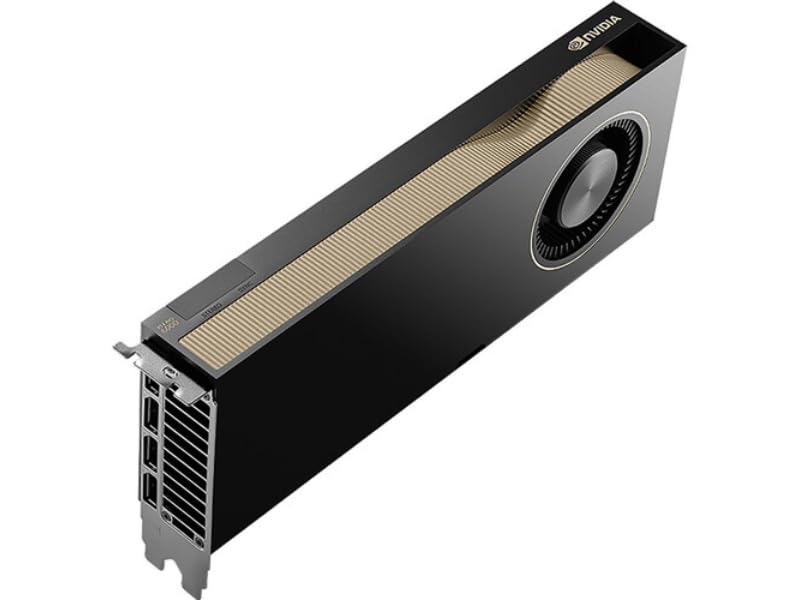
For teams building AI workstations or local dev setups, like the BoxGPT AI Workstation, RTX PRO 6000 Blackwell, air cooling is still viable because the density is lower. But at the enterprise level, where you might be running an ASUS Dual AMD EPYC 9004 Series 4U GPU Server (ESC8000A-E12P), the jump in I/O power consumption becomes a tier-one facility concern.
Key Considerations for Infrastructure Leads:
- Leak Detection at the NIC: Ensure your liquid-cooled NICs have localized leak detection. These are often the first points of failure due to the constant vibration of high-speed optical transceivers.
- Storage Manifold Design: Don't buy a generic rack. Use a manifold specifically designed for GB200 that provides dedicated flow to the storage shelf.
- TCO of Over-provisioning: It is 30% cheaper to over-specify your CDU capacity during the initial build than to retrofit a liquid-cooled data center with more cooling capacity three years later.
§Networking: The 200GbE vs 400GbE thermal bridge
In 2026, the standard for inter-node communication is 400GbE, but many enterprises maintain legacy 200GbE fabrics. The transition is literal fire. A 400GbE optical transceiver pulls significantly more power than its predecessor. When you have a switch top-of-rack with 64 ports of 400GbE, that switch becomes a 1.5kW-2kW furnace.
If you're not integrating that switch into the liquid loop, you're forcing your facility CRAC units to work overtime, killing your Power Usage Effectiveness (PUE) ratings. Check out our latest benchmarks to see how thermal throttling impacts training times across legacy and Blackwell architectures.
§Local Development: A bridge too far?
While the rack-scale GB200 is the dream for production, most ML engineers are still doing their prototyping on professional workstations. If you don't need the 120kW density of a full rack, machines like the NOVATECH Apex WS9985X AI Workstation offer a way to utilize extreme compute (RTX 5090) and high-speed storage without needing a plumber and a dedicated water line.
However, for the enterprise CTO, the lesson remains: The storage and networking you choose will determine if your Blackwell GPUs actually hit their advertised performance.
Heads up: AI Hardware Hub may earn a commission when you buy through links on this page. We only recommend gear we'd run ourselves.
FAQ
Why is liquid cooling required for Blackwell GB200?
The power density of the GB200 chip and the NVLink switch fabric exceeds the physical limits of air cooling. To dissipate over 100kW per rack, liquid cooling (Direct-to-Chip) is the only viable method to maintain stable operating temperatures and prevent hardware degradation.
Do I need to liquid-cool the SSDs in a Blackwell rack?
Yes, in 100kW+ density configurations, Gen5 NVMe storage generates enough heat to trigger thermal throttling. Liquid-cooling the storage shelf ensures consistent data ingest rates, which is vital for keeping the GPUs saturated during large-scale training jobs.
What is the impact of Blackwell GB200 on data center TCO?
While the initial CAPEX for liquid cooling and Blackwell hardware is significantly higher, the TCO is often lower due to better PUE (Power Usage Effectiveness) and the massive reduction in the number of racks required to achieve the same compute performance.
§Bottom line
The Blackwell GB200 rack density is a double-edged sword. It offers the most powerful AI compute environment ever created, but it demands a sophisticated liquid-cooling strategy that extends beyond the GPU. If you ignore the heat of your Gen5 storage and 200GbE/400GbE networking, you're not just leaving performance on the table—you're risking your entire hardware investment. Focus on the CDU and the I/O thermal load, and the FLOPS will take care of themselves.