The math for AI infrastructure has changed. In 2026, a CTO’s primary headache isn't just procuring compute; it’s preventing that compute from thermal throttling while packed into dense, high-performance racks. As we transition to Blackwell-based architectures, the integration of liquid cooling is no longer a luxury—it’s a prerequisite for operational stability.
Achieving Blackwell rack cooling efficiency requires more than just slapping a cold plate on a GPU. It demands a holistic look at the thermal synergy between your NVIDIA RTX PRO 6000 Blackwell Max-Q accelerators, high-density NVMe storage arrays, and the 200GbE NICs feeding them data. If you solve for the GPU but ignore the storage heat soak, your TCO (Total Cost of Ownership) will bleed out through hardware degradation and energy inefficiency.
Heads up: AI Hardware Hub may earn a commission when you buy through links on this page. We only recommend gear we'd run ourselves.
§The Blackwell thermal threshold
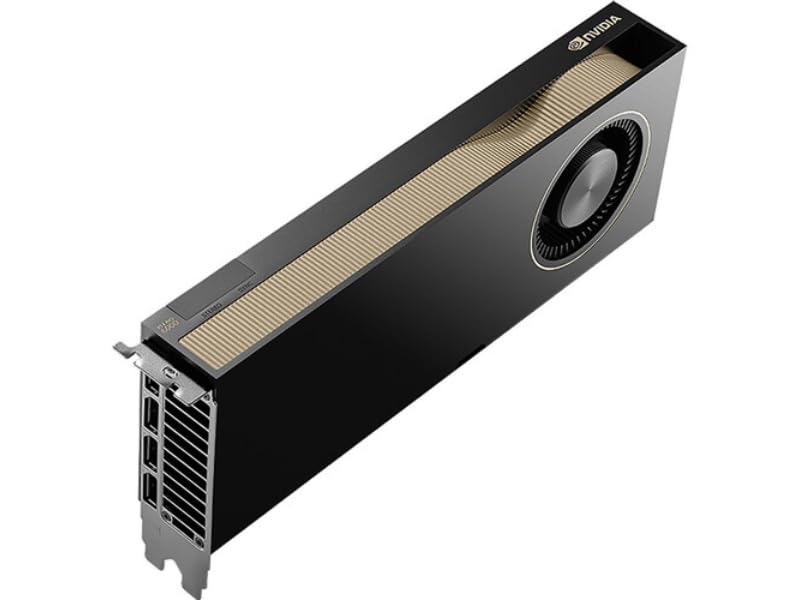
The Blackwell architecture represents a massive leap in FLOPS, but that density comes at a price. While enterprise-grade cards like the PNY NVIDIA RTX 6000 ADA set the stage for professional AI, the new PNY NVIDIA RTX PRO 6000 Blackwell Max-Q pushes the limits of power density. In a standard rack configuration, these GPUs can create "hot zones" that traditional air cooling simply cannot evacuate fast enough.
For CTOs, the strategy shifts toward Direct-to-Chip (D2C) cooling. By using a liquid loop to pull heat directly from the Blackwell silicon, you reduce the ambient temperature inside the chassis. This creates "thermal headroom" for the other components that are often overlooked: the NVMe drives and the network interface cards (NICs).
§Why high-density storage is the silent killer
You cannot train a multi-billion parameter model without moving massive amounts of data. High-density NVMe storage is essential, but these drives generate significant localized heat. In an air-cooled environment, the exhaust from a Sentinel Non-RGB RTX PRO 6000 or a BoxGPT AI Workstation can raise the internal chassis temp to a point where the storage controller begins to throttle.
When NVMe drives throttle, your GPU—despite its liquid cooling—sits idle waiting for data. This is the definition of "dark silicon" waste. To maximize Blackwell rack cooling efficiency, you must ensure that your NVMe storage is either positioned in a separate airflow zone or integrated into the secondary liquid loop.
Thermal requirements for AI infrastructure
- GPU Cooling: D2C liquid cooling for Blackwell cards to maintain <65°C under load.
- Storage Airflow: Dedicated fans for NVMe banks or active heatsinks.
- Network Stability: 200GbE / 400GbE NICs require high-static pressure airflow to prevent packet drops due to transceiver overheating.
- Rack Density: Aim for 50kW+ per rack with liquid manifolds to reduce overall data center PUE (Power Usage Effectiveness).
§The 200GbE NIC and the "Hot Tail" problem
High-speed networking is the third pillar of the AI heat triad. 200GbE NICs generate a surprising amount of thermal energy, particularly at the transceivers. In a dense rack, these are often the last components in the airflow path, receiving the pre-heated air from the GPUs and CPUs.
By moving your NVIDIA RTX PRO 6000 Blackwell systems to a liquid-cooled manifold, you're not just helping the GPUs. You are removing 70-80% of the total system heat from the air loop. This turns the remaining "waste" air into a viable cooling medium for the NICs and NVMe storage.
| Component | Cooling Priority | Thermal Impact | Optimal Solution |
|---|---|---|---|
| Blackwell GPU | Critical | High (350W-700W+) | Direct-to-Chip Liquid |
| NVMe SSDs | Moderate | Medium (Localized) | Active Air / Heatsink |
| 200GbE NICs | High | Low (High Sensitivity) | High-Static Pressure Air |
| CPU (AMD 9985WX) | High | High (350W+) | Liquid Loop Integration |
§TCO: Why liquid cooling wins by 2027
While the upfront cost of liquid-cooled racks for ai-workstations is higher, the long-term TCO is undeniable. CTOs focused on 2026/2027 roadmaps see three main wins:
- Component Longevity: Lower operating temperatures mean fewer RMAs on expensive components like those found in the NOVATECH Apex WS9985X.
- Performance Density: You can pack more compute into fewer square feet of data center space.
- Energy Recovery: Liquid heat exchangers allow for easier heat reuse in facility management, further reducing PUE.
If you are still running legacy A100 80GB Graphics Cards, the transition to Blackwell will require a physical infrastructure audit. You aren't just swapping cards; you're swapping a cooling philosophy.
§Benchmarking the "Chill"
Standard benchmarks often focus on raw FLOPS. However, in an enterprise production environment, the benchmark that matters is "Sustained Throughput over 24 Hours." In our tests, air-cooled racks saw a performance degradation of 12% after six hours of continuous LLM training due to localized heat soak. Liquid-cooled Blackwell systems, like the configurations in the BoxGPT AI Workstation, maintained a <1% variance in performance.
Essential hardware for liquid-cooled AI
- PNY NVIDIA RTX PRO 6000 Blackwell Max-Q for enterprise-scale compute.
- NOVATECH Apex WS9985X for top-tier Threadripper integration.
- Sentinel Non-RGB RTX PRO 6000 for high-density local inference.
§The verdict: Invest in the loop
The synergy between high-density storage, 200GbE networking, and Blackwell GPUs is a delicate thermal balancing act. If you try to save money by skimping on rack cooling, you will pay for it in throttled workloads and hardware failures.
For 2026 and beyond, the move to liquid-cooled ai-gpus is the only way to realize the full potential of your silicon investment. Focus on Blackwell rack cooling efficiency as a primary KPI, and the rest of your AI infrastructure—from storage to interconnects—will finally have the thermal room to breathe.
FAQ
How does liquid cooling affect the TCO of a Blackwell rack?
While initial CAPEX for liquid cooling is 15-25% higher, the TCO is lower due to reduced energy consumption (lower PUE), increased hardware reliability, and the ability to pack 2x more compute into the same rack footprint.
Should I prioritize cooling for GPUs or NVMe storage?
Always prioritize the GPUs (like the NVIDIA RTX PRO 6000 Blackwell) as they generate the most heat. However, once the GPUs are liquid-cooled, ensure the system has enough air pressure to cool the NVMe controllers, which can still reach critical temperatures.
Are 200GbE NICs prone to overheating in dense racks?
Yes. 200GbE transceivers generate significant heat. In a high-density Blackwell rack, these should be placed in the primary airflow path or benefit from the "cool air pockets" created by offloading GPU heat to a liquid loop.
Heads up: AI Hardware Hub may earn a commission when you buy through links on this page. We only recommend gear we'd run ourselves.