The transition to Blackwell-based architectures represents the most significant shift in data center thermodynamics since the introduction of the high-density blade. While the industry fixates on the 1000W+ TDP of the GPU silicon, the true risk to Total Cost of Ownership (TCO) lies in "I/O heat soak"—the secondary thermal accumulation from 200GbE networking and high-density NVMe storage that can throttle performance long before the liquid cooling loop hits its limit. Achieving a positive Blackwell rack infrastructure cooling ROI requires a holistic pivot from focusing on the chip to managing the entire rack-level thermal envelope.
Heads up: AI Hardware Hub may earn a commission when you buy through links on this page. We only recommend gear we'd run ourselves.
§The hidden cost of I/O heat soak
In 2026, we’ve moved past the "can we cool it?" stage into the "can we afford to cool it?" phase. When deploying Blackwell-class systems, the liquid cooling manifolds are exceptionally efficient at removing heat from the primary compute dies. However, this creates a dangerous secondary effect. Because the primary heat source is liquid-cooled, air-flow requirements for the rest of the chassis are often reduced to save power.
This leads to a phenomenon we call "I/O heat soak." High-density NVMe drives and 200GbE/400GbE network interface cards (NICs) still rely primarily on forced air or passive heat dissipation from the PCB. In a dense Blackwell rack, the ambient air within the chassis can rapidly exceed the operating threshold of Gen5 SSDs, causing thermal throttling during heavy checkpointing or data ingestion. If your GPUs are at 45°C but your storage is throttling at 80°C, your training job stalls just the same.
§Networking and storage: The overlooked thermal drivers
Modern AI clusters aren't just compute-heavy; they are incredibly I/O-intensive. Every time a model checkpoints, your NVMe fabric is hit with massive write loads. In AI workstations or enterprise racks, this heat builds up behind the GPUs, often in the "shadow" of the primary cooling pipes.
Key infrastructure components contributing to this thermal load include:
- Optical Transceivers: 200GbE and 400GbE optics consume significant power (up to 12W+ per module), creating localized hot spots at the switch and NIC faceplates.
- Gen5 NVMe Arrays: Sustained write speeds across 24 or more drives in a 2U chassis create a thermal floor that air cooling struggles to penetrate.
- Voltage Regulator Modules (VRMs): Even with liquid-cooled cold plates, the power delivery components on the motherboard require localized airflow.
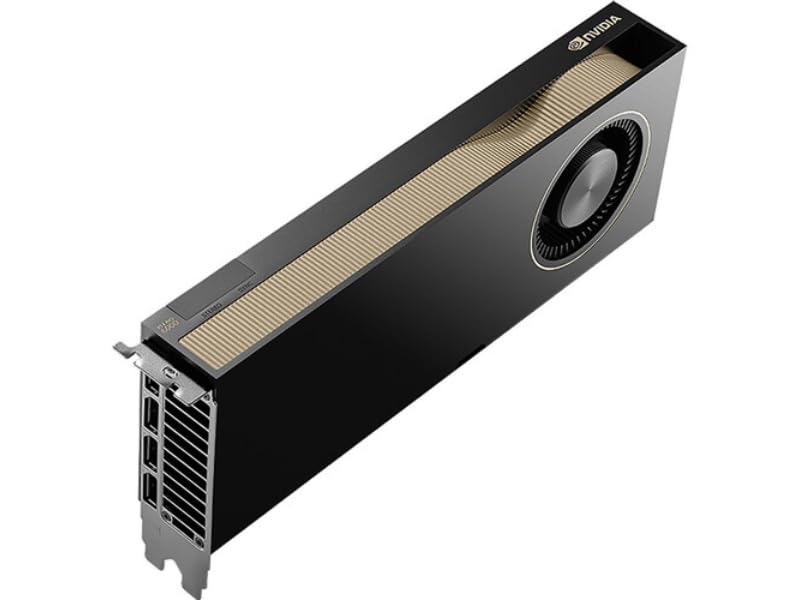
For those transitioning from older architectures, like the PNY NVIDIA RTX 6000 ADA, the jump to Blackwell-level density requires a complete rethink of how air moves across these non-GPU components.
§Comparing thermal footprints: Blackwell vs. Ada Generations
| Component Feature | PNY NVIDIA RTX 6000 ADA | RTX PRO 6000 Blackwell Max-Q |
|---|---|---|
| Architecture | Ada Lovelace | Blackwell |
| VRAM | 48GB GDDR6 | 96GB GDDR6 |
| Dominant Cooling | Forced Air | Liquid / Specialized Air |
| Typical High-Speed I/O | PCIe Gen4 / 100GbE | PCIe Gen5 / 200-400GbE |
| Thermal Risk Profile | GPU Throttling | I/O Heat Soak / VRM Saturation |
§Strategizing Blackwell rack infrastructure cooling ROI
Investing in liquid-to-chip cooling is just the entry fee. To maximize ROI, CTOs must look at the rack as a unified thermal machine. If you are deploying an ASUS Dual AMD EPYC 9004 Series 4U GPU Server, you are dealing with massive power delivery to the H200 accelerators. Scaling this to a full rack of Blackwell systems requires "hybrid" cooling—redirecting the "saved" air-cooling capacity specifically toward the networking spine and the storage tiers.
The ROI comes from three areas:
- Reduced Fan Parasitic Load: By using liquid for the AI GPUs, you can run chassis fans at lower RPMs, but only if the I/O specialized cooling is efficient.
- Extended Component Lifespan: High-density SSDs fail faster when consistently operated near 70°C. Lowering I/O ambient temps by 10°C can double the MTBF (Mean Time Between Failures).
- Consistent Training Cadence: Preventing storage-induced wait states ensures your $13,000+ PNY Blackwell Max-Q cards aren't sitting idle.
§From local pods to enterprise racks
The thermal challenge isn't exclusive to the data center. Even high-end local systems like the BoxGPT AI Workstation must manage the relationship between the 96GB VRAM Blackwell GPUs and the NVMe storage. When these units are pushed for local LLM fine-tuning, the internal case temperature can elevate the 2TB NVMe drive to its limit quickly if the chassis utilizes a traditional air-flow path that is obstructed by large GPU heat sinks.
For organizations that aren't yet ready for full Blackwell liquid-cooling rack integration, the intermediate step involves high-airflow AI workstations or servers like the NOVATECH Apex WS9985X, which uses the Threadripper PRO's massive PCIe lane count to space out I/O components, mitigating the "soak" effect found in 1U or 2U form factors.
§Implementation: The rack-level checklist
To ensure your infrastructure doesn't become a victim of its own density, follow these guidelines for Blackwell-ready environments:
- Implement Rear-Door Heat Exchangers (RDHx): Even with liquid-to-chip, a portion of the heat (roughly 15-20%) remains in the air. RDHx captures this before it enters the hot aisle.
- Isolate Storage Airflow: Use baffles to ensure the air passing over the NVMe drives is "fresh" and not pre-heated by the networking transceivers.
- Monitor Optics Temps: Standardize on transceivers with digital diagnostics to monitor temperatures in real-time within your DCIM benchmarks.
- Right-Size the CDUs: Cooling Distribution Units (CDUs) should be sized with 20% overhead to account for future upgrades to higher-wattage Blackwell variants.
§Verdict: The I/O-first approach
The Blackwell era demands we stop treating cooling as a GPU-centric problem. The silicon is the star, but the networking and storage are the stage—and if the stage is on fire, the show won't go on. Maximizing Blackwell rack infrastructure cooling ROI means investing in high-fidelity thermal management for the components that don't have fancy liquid cold plates. Whether you are running a single BoxGPT Workstation or a full row of ASUS Enterprise Servers, the strategy remains: cool the I/O, or prepare for the throttle.
FAQ
What is "I/O heat soak" in Blackwell systems?
I/O heat soak occurs when the primary compute components (GPUs) are efficiently liquid-cooled, but the surrounding I/O components like NVMe drives and 200GbE NICs are left in stagnant or pre-heated air, leading to thermal throttling of the storage and network fabric.
Can I still use air-cooling for Blackwell servers?
While possible for lower-density configurations, Blackwell's high TDP and the density of modern clusters make air-cooling increasingly inefficient. Liquid-to-chip cooling is now the industry standard for maintaining performance and reducing long-term TCO.
How does networking heat affect AI training performance?
High-speed networking optics (200GbE+) generate significant heat. If these modules overheat, they may drop packets or reduce throughput, causing "bubbles" in the training pipeline where the GPUs sit idle waiting for data, directly impacting your infrastructure ROI.
Heads up: AI Hardware Hub may earn a commission when you buy through links on this page. We only recommend gear we'd run ourselves.