The arrival of the Blackwell architecture has shifted the conversation from "how much VRAM can we fit?" to "how do we stop the rack from melting under 100kW loads?" Optimizing Blackwell rack TCO efficiency isn't just about clicking buy on the fastest silicon; it’s a delicate balancing act between Gen5 NVMe throughput, 200GbE fabric saturation, and the thermal realities of high-density compute. If your I/O is throttling because your SSDs are hitting 80°C or your networking isn't keeping pace with HBM3e speeds, your ROI is evaporating.
Heads up: AI Hardware Hub may earn a commission when you buy through links on this page. We only recommend gear we'd run ourselves.
§The death of air-cooled density
In 2026, the thermal envelope of a standard enterprise rack has ballooned. We've moved past the days when a few high-CFM fans could manage a cluster of A100 80GB Graphics Card - 80 GB HBM2e ECC units. Blackwell’s performance-per-watt is impressive, but the absolute heat flux is staggering.
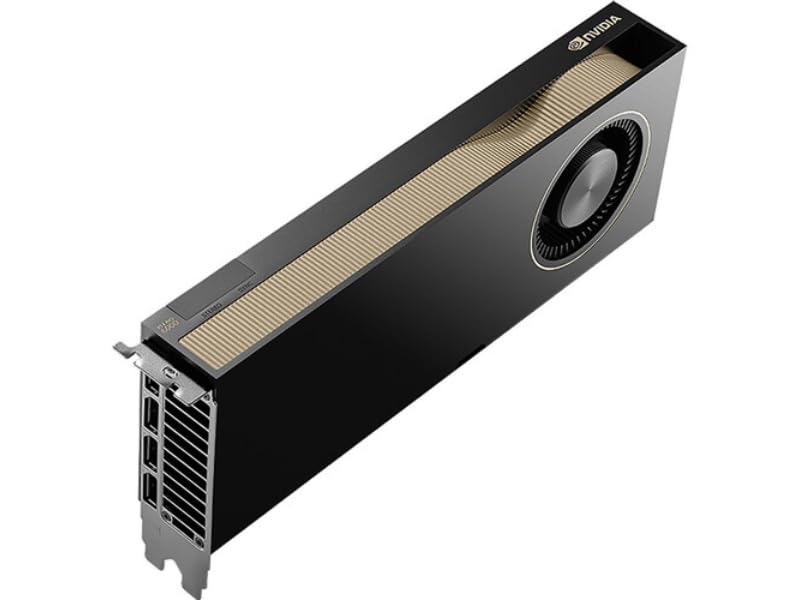
CTOs often make the mistake of focusing solely on the GPU's TDP. However, in a dense rack environment, the "supporting cast"—the NVMe storage and the SmartNICs—contributes significant heat and is far more sensitive to thermal throttling. When Gen5 NVMe drives heat up during massive dataset ingest, they drop from 14GB/s to 2GB/s in seconds to protect the controller. This creates a "starved GPU" scenario where your $13,000 PNY Technology VCNRTXPRO6000BQ-PB NVIDIA RTX PRO 6000 Blackwell Max-Q Workstation Graphics Card sits idle, waiting for data. Liquid cooling is no longer a luxury; it’s an operational requirement for maintaining I/O consistency.
§Why 200GbE is the Blackwell baseline
Networking has become the literal backbone of TCO. With Blackwell’s massive 96GB or 141GB VRAM capacities, fetching model weights or synchronizing gradients across a cluster over 100GbE creates a massive bottleneck.
To maximize benchmarks and cluster utilization, 200GbE (or increasingly 400GbE) is the baseline.
- Reduced Latency: Moving layers between nodes shouldn't take longer than the compute operation itself.
- RDMA Efficiency: Modern AI frameworks rely on Remote Direct Memory Access (RDMA) to bypass CPU overhead.
- Thermal Sync: Higher-speed networking cards often require more localized cooling, often necessitating integrated liquid loops in high-density ai-workstations.
§Comparing I/O and Thermal Specs for Modern AI Systems
| System | GPU Architecture | Peak VRAM | Primary Cooling Drive | Best For |
|---|---|---|---|---|
| BoxGPT AI Workstation | Blackwell | 96GB | Air/Hybrid | Local LLM Development |
| ASUS ESC8000A-E12P | Hopper (H200) | 141GB | Rack Optimized Air | Multi-node Cluster Compute |
| Novatech Apex WS9985X | Blackwell (RTX 5090) | 32GB | High-Flow Air | VFX & Hybrid AI Workloads |
§The "Invisible" TCO Killer: Gen5 NVMe Throttling
We see this in our lab tests constantly: a high-end Cloud Ninjas Iron Bull AI Workstation starts a training run at peak efficiency, but 20 minutes in, performance cratering by 30%. The culprit? The Gen5 NVMe drive tucked behind a massive GPU.
Gen5 drives generate significantly more heat than Gen4. In a Blackwell-based rack, the air is already pre-heated by the GPUs before it even hits the storage controllers. To maintain Blackwell rack TCO efficiency:
- Direct-to-Chip Cooling: Ensure your storage backplane isn't an afterthought.
- PCIe Lane Allocation: Using systems like the ASUS ESC8000A-E12P allows for better physical separation of I/O cards and compute cards, reducing thermal crosstalk.
- Active NVMe Heatsinks: In workstations like the Novatech Apex WS9985X, ensure there is dedicated airflow over the m.2 slots.
§Balancing local workstation vs. Rack compute
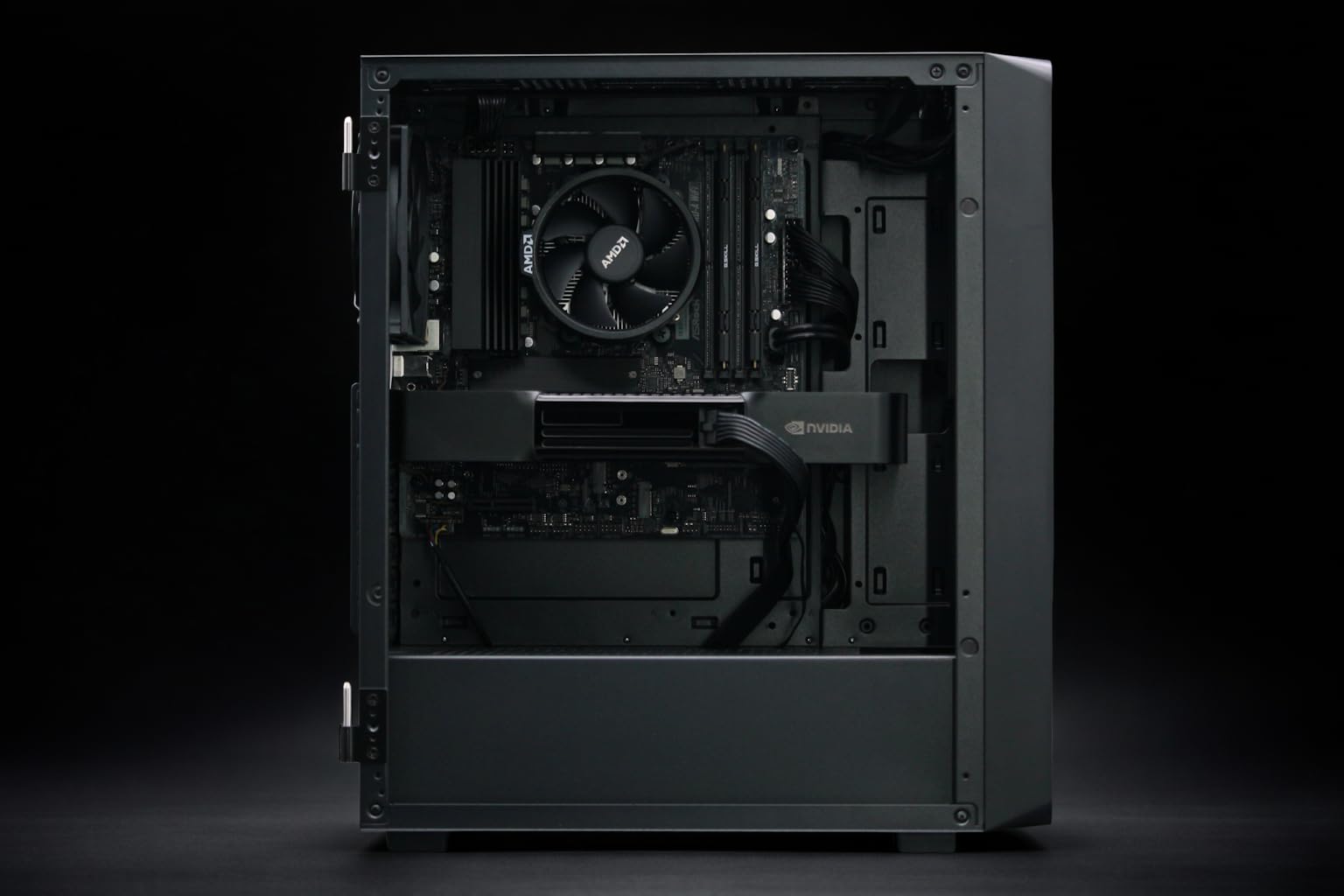
For most CTOs, the strategy should be a "Hub and Spoke" model. Keep the heavy, high-density training on specialized rack systems, but equip your engineers with Blackwell-powered locally. The PNY RTX PRO 6000 Blackwell Max-Q is a masterclass in efficiency, providing 96GB of VRAM in a form factor that doesn't require a dedicated HVAC system.
By offloading the "testing and trimming" phase to workstations, you preserve the expensive rack I/O cycles for final training runs. This reduces the total energy cost and extends the lifespan of your data center’s cooling infrastructure.
§Maximize ROI through I/O orchestration
Buying a PNY Technology VCNRTXPRO6000BQ-PB is just step one. To get the most out of your investment, you need to ensure the data path is widened. This means:
- Moving to DDR5-6000+ memory to feed the PCIe 5.0 bus.
- Implementing 200GbE leaf-spine architectures to prevent "noisy neighbor" network congestion.
- Considering liquid-to-air heat exchangers at the rack level for Blackwell deployments exceeding 40kW.
FAQ
How does Blackwell TCO compare to previous generations like Ampere?
While the upfront hardware cost for a PNY Technology VCNRTXPRO6000BQ-PB is higher than an A100 80GB, the performance-per-watt is nearly double. This means your operational power and cooling costs per training run are significantly lower, leading to a faster break-even point for large-scale deployments.
Can I run Blackwell GPUs in a standard air-cooled server?
Technically yes, but you will likely face thermal throttling. High-density systems like the ASUS ESC8000A-E12P are designed with high-static pressure fans specifically to handle this, but for maximum Blackwell rack TCO efficiency, moving toward liquid loops is highly recommended in 2026.
Is Gen5 NVMe really necessary for AI training?
Yes. With advancements in ai-gpus, the bottleneck has moved from the processor to the storage. If your NVMe cannot feed the GPU fast enough, you are paying for VRAM that is sitting idle.
§The bottom line
Efficiency in 2026 is measured by I/O stability, not just peak teraflops. To ensure you aren't wasting capital, your Blackwell deployment must treat networking and cooling with the same reverence as the GPUs themselves. Whether you are deploying a high-end BoxGPT AI Workstation or a full data center rack, the goal remains the same: keep the silicon cool so the data can flow.
Heads up: AI Hardware Hub may earn a commission when you buy through links on this page. We only recommend gear we'd run ourselves.