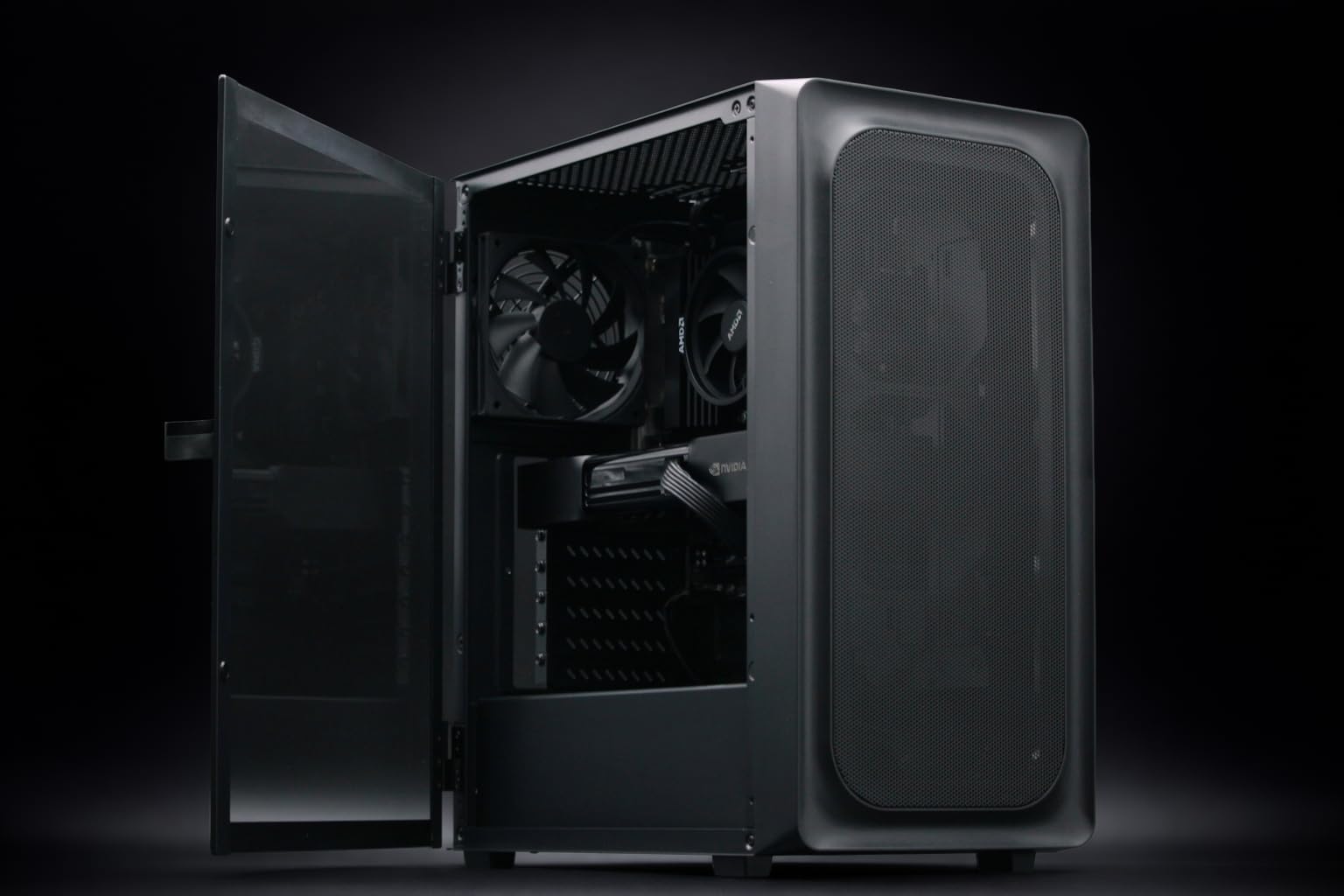
In 2026, the conversation around AI infrastructure has shifted from simple FLOPs to the gritty reality of thermal headroom and I/O saturation. To maximize Blackwell Rack TCO efficiency, CTOs must look beyond the raw power of the GPU and address the heat generated by the very components that feed it: 200GbE networking and high-density NVMe storage. Without a unified liquid-cooling strategy for the entire data path, your expensive Blackwell chips will spend half their cycles waiting on thermally throttled components.
Heads up: AI Hardware Hub may earn a commission when you buy through links on this page. We only recommend gear we'd run ourselves.
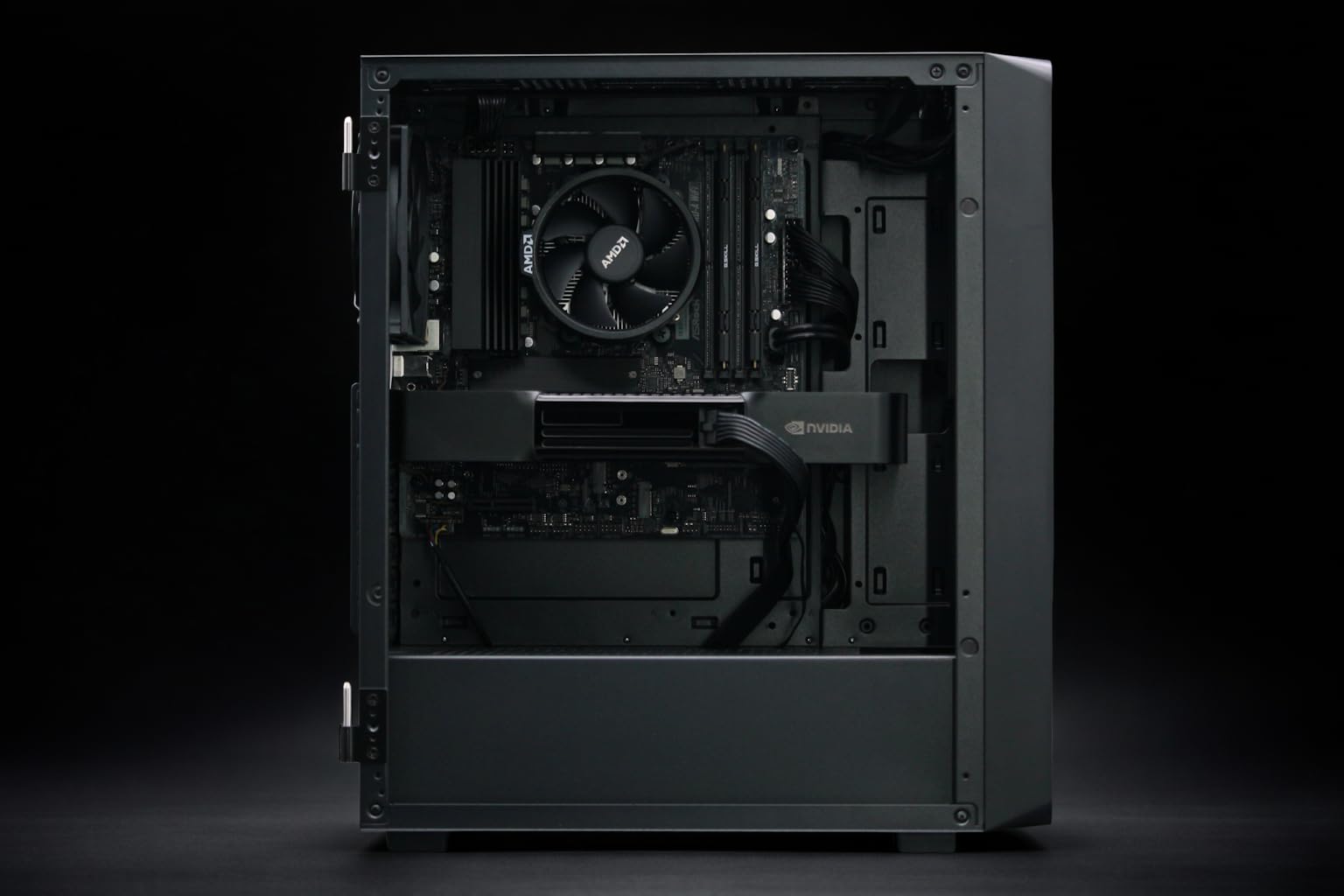
§The thermal wall of 200GbE and NVMe
For years, we treated storage and networking as secondary heat sources. In the era of the PNY NVIDIA RTX 6000 ADA, standard air-cooling was often sufficient for the supporting cast. Today, if you’re deploying a rack of Blackwell-based systems, a single 200GbE Network Interface Card (NIC) can pull upwards of 25-30W, and a dense array of Gen5 NVMe drives can easily exceed 100W under sustained load.
When these components reside in the same chassis as a high-TDP GPU like the NVIDIA RTX PRO 6000 Blackwell Max-Q, the ambient internal temperature rises faster than traditional fans can exhaust. This creates a feedback loop: the GPU downclocks to protect its silicon, and your $13,000+ investment starts performing like a mid-range card from three years ago.
§Why liquid cooling the data path is mandatory
Modern AI workloads are rarely compute-bound in a vacuum; they are increasingly I/O bound. If you are training a large language model (LLM) or running massive inference batches, the data must travel from NVMe to RAM to GPU via the NIC.
- Storage Longevity: NVMe controllers are notoriously sensitive to heat. Sustained 80°C+ temperatures lead to premature drive failure and data corruption.
- Latency Stability: Liquid-cooled 200GbE switches and NICs maintain consistent signal integrity. Air-cooled equivalents often experience "jitter" as thermal management kicks in, killing your distributed training efficiency.
- Rack Density: By moving to a full-loop liquid setup, you can stack more units per rack, directly improving the Blackwell Rack TCO efficiency by reducing the physical footprint required for the same compute power.
For those bridge-building between local dev and scale, systems like the Adamant Custom 12-Core Liquid Cooled Workstation show how liquid cooling is no longer an "enthusiast" feature—it's a requirement for sustained 24/7 reliability.
§Comparing thermal management strategies
The following table compares the typical overhead and efficiency of common Blackwell-era deployments.
| Component Set | Cooling Method | Estimated Rack Power Density | Thermal Throttling Risk |
|---|---|---|---|
| Blackwell Max-Q + 100GbE | Air-Cooled | 15-20kW | High (Ambient Heat) |
| RTX PRO 6000 Blackwell + 200GbE | Hybrid (Liquid GPU/Air Case) | 30-35kW | Medium |
| Blackwell + 200GbE + NVMe | Full DLC (Direct Liquid Cooling) | 50kW+ | Low |
§Protecting capital investment through I/O efficiency
Infrastructure leads often make the mistake of over-provisioning GPUs while under-provisioning the bus. A BoxGPT AI Workstation with dual Blackwell GPUs offers 96GB of VRAM, but that VRAM is only useful if the 200GbE fabric can feed it fast enough to keep the CUDA cores saturated.
If your networking gear is overheating, packet loss increases. In a distributed Blackwell environment, a 1% packet loss can result in a 50% drop in training throughput. This is the "hidden tax" of poor thermal design. By investing in liquid-cooled networking components, you aren't just buying cooling—you're buying a guarantee that your GPUs can actually run at their rated TFLOPS.
§Scalability and the enterprise tier
At the enterprise level, the stakes are even higher. Servers like the ASUS ESC8000A-E12P are designed for extreme density. While these often ship with high-performance fans, the 2026 trend is a move toward rack-level manifolds. Check our categories/ai-workstations for systems that are already pre-configured for these high-thermal environments.
Protecting your investment means understanding that the GPU is just one part of the silicon "heating element" inside your rack. High-density NVMe storage produces concentrated heat spots that can cause nearby PCIe controllers to fail. To maintain Blackwell Rack TCO efficiency, your cooling solution must be as holistic as your software stack.
FAQ
How does liquid cooling impact the lifespan of NVMe drives?
Excessive heat is the primary killer of NAND flash and controllers. By keeping high-density NVMe drives under 50°C through liquid cooling or aggressive airflow, you significantly reduce the Uncorrectable Bit Error Rate (UBER) and extend the drive's TBW (Total Bytes Written) reliability.
Is 200GbE networking really necessary for Blackwell GPUs?
For multi-node training, yes. The massive VRAM and compute throughput of chips like the NVIDIA RTX PRO 6000 Blackwell can easily saturate 100GbE links, creating a bottleneck that leaves the GPUs idle. 200GbE provides the necessary headroom for efficient data-parallel operations.
Can I retrofit air-cooled Blackwell racks for liquid cooling?
It depends on the rack manifold infrastructure. While individual workstations like the Adamant Custom Liquid Cooled Workstation are self-contained, enterprise racks usually require a Rear Door Heat Exchanger (RDHx) or Direct-to-Chip (DTC) loops connected to a Facility Water System.
§The bottom line
The era of "just add more fans" is over. To achieve peak Blackwell Rack TCO efficiency, you must treat the GPU, the 200GbE networking, and the NVMe storage as a single thermal entity. If you focus only on the GPU, you'll find your performance throttled by the very infrastructure meant to support it. Invest in high-density cooling now, or pay for it later in hardware failure and lost productivity.
Explore the latest in high-performance hardware at our categories/ai-gpus and check out our updated benchmarks for real-world thermal data on latest-gen systems.
Heads up: AI Hardware Hub may earn a commission when you buy through links on this page. We only recommend gear we'd run ourselves.