In the high-stakes race for Blackwell dominance, most infrastructure leads are staring at GPU thermal envelopes while ignoring the "silent" heat creep coming from the surrounding silicon. Realizing maximum Blackwell Rack TCO efficiency requires moving beyond the GPU die and addressing the massive thermal load of 800G optical networking and high-density NVMe storage arrays that now consume up to 25% of rack power. To keep these systems from throttling, liquid cooling integration is no longer a luxury—it’s the definitive baseline for enterprise viability in 2026.
Heads up: AI Hardware Hub may earn a commission when you buy through links on this page. We only recommend gear we'd run ourselves.
§The shifting thermal balance of Blackwell racks
For years, the GPU was the only thing that mattered for cooling. If you could keep an A100 80GB Graphics Card under its thermal limit, you were winning. But Blackwell has rewritten the rules of the data center. As we scale to GB200 NVL72 architectures, the scale-out networking—specifically the InfiniBand/Ethernet NICs and optical transceivers—is generating heat densities that rival the processors of five years ago.
When you pack 72 GPUs into a single rack, the interconnect isn't just a cable; it’s a massive distributed heater. Modern 800G BlueField-3 DPU modules and ConnectX-7 adapters generate significant thermals that traditional air cooling struggles to evacuate from the cramped space between GPU trays. If your networking overheats, packet loss spikes, and your billion-dollar cluster sits idle waiting for synchronization.
§Why flash storage is the new hot zone
We often think of NVMe drives as "cool" compared to a 700W GPU. However, in the context of Blackwell training runs, these drives are under constant, relentless load. To feed a system like the BoxGPT AI Workstation, flash storage must maintain massive sustained throughput.
In a rack-scale environment, the collective heat of 256TB or 1PB of high-speed flash can create "hot pockets" that trigger drive throttling. This isn't just about speed; it's about longevity. Excessive heat cycles on enterprise NVMe degrade the NAND faster, leading to premature drive failure and increased Opex.
Critical subsystems contributing to heat
- Optical Transceivers: 800G optics can pull 20-30W per port. Multiply that by 128 ports in a dense switch, and you have several kilowatts of concentrated heat.
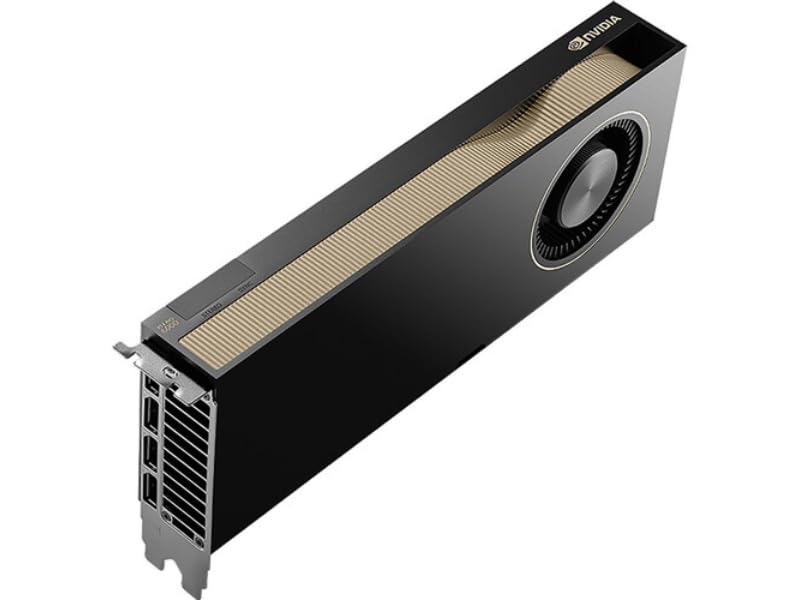
- Memory Controllers: Large HBM3e stacks on GPUs like the PNY NVIDIA RTX 6000 ADA generate intense heat at the interface level.
- Voltage Regulator Modules (VRMs): These convert rack-level DC to the ultra-low voltages GPUs require, often operating at 90-95% efficiency, meaning 5-10% of that massive power draw is lost as pure heat right next to the silicon.
§The roadmap to liquid cooling integration
Direct-to-chip (DTC) liquid cooling is the only way to sustain 2026-era AI workloads without massive acoustic noise and astronomical fan power costs. In a traditional air-cooled data center, the "tax" for cooling can be 40% of the total energy bill. By moving to liquid, organizations can drop their PUE (Power Usage Effectiveness) from 1.5 down to 1.1 or lower.
For smaller builds, specialized workstations like the Adamant Custom 12-Core Liquid Cooled Workstation demonstrate how liquid loops allow high-TDP components like the RTX 5090 to stay at peak clock speeds without thermal throttling. At the enterprise scale, this translates to Rack-level CDU (Cooling Distribution Units) that manage the interplay between the GPUs and the supporting networking fabric.
§Blackwell Rack TCO efficiency: A Comparison
| Component | Air-Cooled Efficiency (TCO Rank) | Liquid-Cooled Efficiency (TCO Rank) | Thermal Impact |
|---|---|---|---|
| Blackwell GPUs | Low (Throttling likely) | High (Maximum clock) | High (700W+ per unit) |
| 800G Networking | Moderate | High | Medium (High density heat) |
| Enterprise NVMe | High (Drives can handle air) | Extremely High (Longer life) | Low/Medium |
| Overall PUE | 1.45 - 1.6 | 1.05 - 1.15 | Critical |
By investing in liquid infra now, you aren't just buying cooling—you're buying head-room. Systems like the ASUS ESC8000A-E12P are designed with airflow optimization in mind, but as we push into the Blackwell era, even these robust 4U chassis are increasingly being paired with rear-door heat exchangers (RDHx) to manage the exhaust.
§Infrastructure lead focus: The networking bottleneck
If your networking isn't liquid-cooled alongside your GPUs, you’re only solving half the problem. In a dense Blackwell cluster, the networking gear often sits at the top of the rack where the hottest air collects. We’ve seen instances where the GPUs are frosty at 50°C thanks to cold plates, but the InfiniBand switches are screaming at 85°C, causing intermittent link drops.
Integrated Blackwell solutions now look at "total liquid coverage." This means cooling the PNY Technology VCNRTXPRO6000BQ-PB and the top-of-rack switches through a shared manifold. This holistic approach is the only way to achieve the Blackwell Rack TCO efficiency targets required for modern AI ROI.
§Long-term Opex and the "Fan Power" trap
Many leads underestimate the power consumed by fans alone. In a high-density air-cooled rack, fans can consume up to 10-15% of the total power. Liquid cooling replaces those high-RPM fans with low-power pumps. For a 100kW rack, switching to liquid could save you $15,000 annually in electricity just by eliminating fan power.
Furthermore, workstations like the NOVATECH Apex WS9985X show that high-performance components can coexist in a quieter, more stable environment, reducing the mechanical stress of vibrations caused by server-grade fans spinning at 15,000 RPM.
FAQ
How does networking affect Blackwell Rack TCO?
Poorly cooled networking modules (NICs and transceivers) lead to signal degradation and retries. This increases the time-to-train for LLMs, effectively wasting the high-cost GPU cycles. Liquid cooling the networking fabric ensures consistent 800G-1.6T throughput.
Can I run Blackwell GPUs on air cooling safely?
While cards like the PNY NVIDIA RTX 6000 ADA are designed for workstations, server-grade Blackwell chips generate enough heat that air cooling requires massive airflow and wide spacing, which destroys rack density and increases data center floor space costs.
Is liquid cooling worth the higher upfront Capex?
Yes. For any deployment over 40kW per rack, the reduction in PUE and the extension of hardware lifespan (specifically for NVMe and VRMs) usually results in a ROI within 18-24 months compared to traditional air-cooled infrastructure.
§Bottom line
The 2026 data center is no longer a place for simple air-chilled racks. If you're deploying Blackwell, your TCO is dictated by how well you manage the interplay between GPU, networking, and storage thermals. Don't let your high-performance ASUS ESC8000A-E12P setup be crippled by an overlooked 30W transceiver. Move to a liquid-first strategy or prepare for the Opex of a legacy air-cooled facility to eat your margins.
Check out our full breakdown of AI GPUs and AI workstations to find the right thermal fit for your next build. For deep dives into performance metrics, visit our benchmarks page.
Heads up: AI Hardware Hub may earn a commission when you buy through links on this page. We only recommend gear we'd run ourselves.