In the high-stakes race of 2026, infrastructure leads are realizing that raw TFLOPS are a vanity metric if your 200GbE fabric and NVMe tiers are drowning in waste heat. High-density rack configurations are no longer just about packing as many Blackwell chips into a chassis as possible; they are about managing the invisible tax of thermal throttling that erodes your Blackwell Rack TCO Efficiency. To maintain peak OpEx performance, the focus must shift from component-level cooling to holistic liquid-cooled environments that protect the entire I/O path.
Heads up: AI Hardware Hub may earn a commission when you buy through links on this page. We only recommend gear we'd run ourselves.
§The hidden cost of I/O thermal throttling
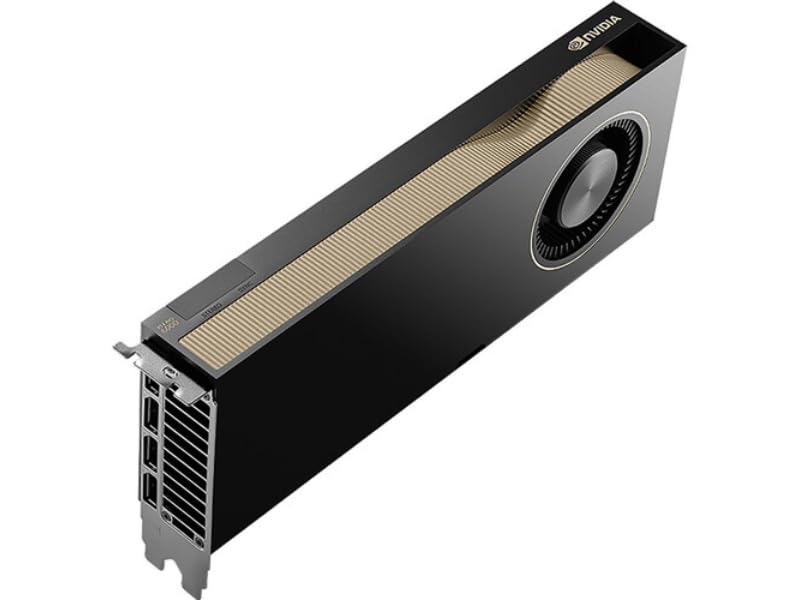
When we talk about Blackwell-era clusters, the conversation usually starts and ends with the GPU. However, the move to 200GbE and 400GbE networking, paired with PCIe Gen6 NVMe storage, has created a secondary thermal crisis. In a standard air-cooled rack, the heat exhaust from a bank of PNY Technology VCNRTXPRO6000BQ-PB NVIDIA RTX PRO 6000 Blackwell Max-Q Workstation Graphics Cards can raise ambient intake temperatures for the networking cards and flash controllers sitting "behind" them in the airflow path.
Throttling isn't just a performance dip; it's a financial bleed. When a 200GbE NIC throttles due to high ambient rack heat, packet retries skyrocket, latency spikes, and your expensive GPU clusters sit idle waiting for data. If your GPUs are 20% less productive because of I/O bottlenecks, your effective cost per token increases by 25%.
§From air-cooled legacy to liquid-cooled necessity
The transition from the PNY NVIDIA RTX 6000 ADA to the Blackwell architecture has pushed air cooling to its physical limit. While the Ada generation thrived in traditional AI workstations, the sheer power density of a Blackwell-based rack demands a rethink.
Liquid-to-chip cooling (DLC) is no longer a luxury for specialized labs; it’s the primary driver of Blackwell Rack TCO Efficiency. By removing 80-90% of the heat directly from the GPUs and processors, you lower the "heat soak" effect on the rest of the rack. This allows NVMe storage arrays to run at peak sequential speeds without hitting the thermal ceilings that trigger performance curbs.
Comparison: Thermal overhead and VRAM density
| GPU Model | Architecture | VRAM | Thermal Strategy | Best Use Case |
|---|---|---|---|---|
| A100 80GB | Ampere | 80GB | Air/Passive | Legacy clusters |
| RTX 6000 ADA | Ada Lovelace | 48GB | Active Air | Edge Inference |
| RTX PRO 6000 Blackwell | Blackwell | 96GB | Max-Q/Liquid | High-Density Training |
§Scaling storage and networking in the Blackwell era
Modern AI GPUs require a constant "firehose" of data. If you are deploying enterprise-grade systems like the ASUS Dual AMD EPYC 9004 Series 4U GPU Server (ESC8000A-E12P), the thermal load of the dual H200 accelerators is only half the story. The 24 DIMM slots and the high-speed networking fabric required to feed those 141GB HBM3e buffers generate significant heat.
In a high-density configuration:
- Networking: Optical transceivers for 200GbE can reach 70°C+ easily. Without precision cooling, these are the first components to fail or drop speed.
- Storage: NVMe Gen5/Gen6 drives can lose 30-50% of their throughput when they hit thermal limits, directly impacting checkpointing times.
- Memory: When DDR5 modules run hot, the error-correction (ECC) logic works harder, which can introduce subtle latency penalties.
§Why OpEx is the new ROI
For years, CTOs focused on CapEx—the sticker price of the rack. In 2026, the focus has shifted to OpEx. The cost of electricity for cooling (PUE) and the cost of "under-utilized silicon" are the metrics that keep infrastructure leads awake.
Deploying a BoxGPT AI Workstation, RTX PRO 6000 Blackwell at the edge or in a localized dev environment is manageable. But when scaling to a full rack, the density matters. If you can use liquid cooling to pack 30% more compute into the same square footage with lower fan noise and heat waste, your Blackwell Rack TCO Efficiency improves drastically over the 3-year lifecycle of the hardware.
§Implementing a strategy for thermal resilience
Infrastructure leads should focus on three pillars to maximize their investment:
- Direct-to-Chip Cooling: Prioritize servers that support liquid loops for both the GPU and the CPU.
- I/O Airflow Isolation: Ensure that your 200GbE switches and NVMe storage trays aren't receiving the direct exhaust of the GPU clusters.
- Intelligent Telemetry: Use OOB management to monitor not just GPU temps, but the junction temperature of your NICs and SSDs.
For those running localized heavy workloads, systems like the NOVATECH Apex WS9985X AI Workstation offer a glimpse into how enterprise-grade components (AMD Threadripper PRO + RTX 5090) require robust thermal management even outside the data center rack. You can check the latest benchmarks to see how thermal variance impacts model training epochs.
§Bottom line: Thermal management is a finance problem
We’ve moved past the era where cooling was just about "keeping things running." In 2026, thermal management is about protecting the margin of your AI services. Every degree you shave off your rack temperature is an investment in the longevity of your NVMe drives and the stability of your 200GbE fabric.
If you're building out a new cluster, don't just look at the VRAM of the NVIDIA H200 NVL. Look at the cooling architecture. The most expensive hardware is the gear that's forced to slow down to keep from melting.
FAQ
Why does 200GbE networking require more cooling than previous generations?
Higher data rates require more power-intensive signal processing and higher-density optical transceivers. These components generate significant heat, and because they are often located at the edge of the chassis, they are susceptible to heat soak from central components like Blackwell GPUs.
How does liquid cooling improve TCO?
Liquid cooling reduces the energy required for high-speed fans (lowering PUE) and allows hardware to run at its maximum rated clock speed without thermal throttling. This ensures you get the full compute value of the $13,000+ price tag of cards like the PNY RTX PRO 6000 Blackwell.
Can I run a Blackwell-based rack on air cooling alone?
While possible, it is commercially inefficient for high-density environments. Air cooling requires significant spacing between units and high-velocity fans, which increases ambient noise and electricity costs, ultimately hurting your Blackwell Rack TCO Efficiency compared to liquid-cooled counterparts.
Heads up: AI Hardware Hub may earn a commission when you buy through links on this page. We only recommend gear we'd run ourselves. Check our AI workstations category for more high-performance builds.