To maximize Blackwell rack TCO efficiency, CTOs must move beyond cooling only the GPU and adopt a holistic silicon-to-rack thermal strategy that includes high-density NVMe and 200GbE networking components. Failure to address the "thermal shadow" created by liquid-cooled accelerators leads to throttled I/O and premature hardware failure, directly eroding the ROI of multi-million dollar AI clusters.
Heads up: AI Hardware Hub may earn a commission when you buy through links on this page. We only recommend gear we'd run ourselves.
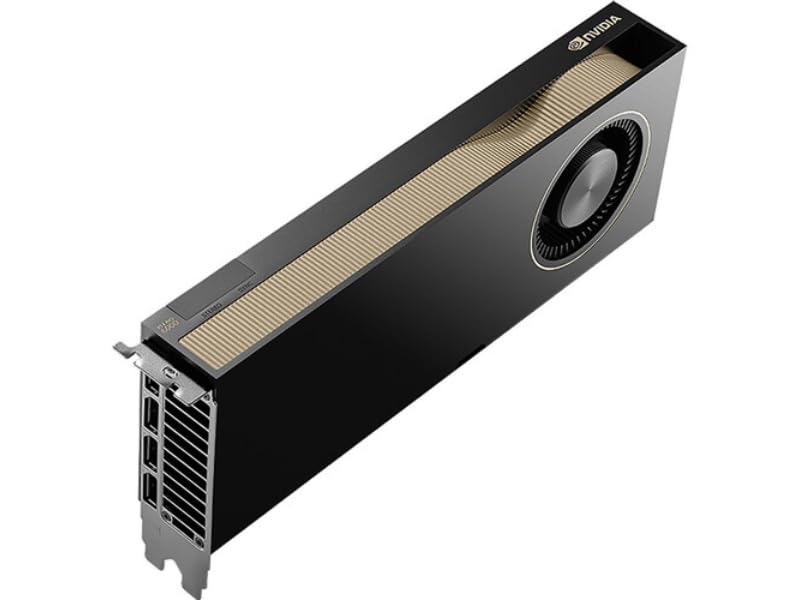
The Blackwell era has officially arrived in 2026, bringing with it an unprecedented leap in compute density. But as we transition from air-cooled PNY NVIDIA RTX 6000 ADA units to the massive liquid-cooled Blackwell racks, a dangerous oversight is emerging in data center architecture. While Direct-to-Chip (D2C) cooling successfully tames the 1000W+ TDP of the primary accelerators, it often leaves the supporting infrastructure—specifically 200GbE NICs and Gen6 NVMe storage—gasping for air in an environment with reduced chassis airflow.
§The thermal shadow: Why liquid cooling GPUs isn't enough
In traditional air-cooled setups, high-velocity fans pull air across every component in the server. In a liquid-cooled Blackwell rack, the GPUs are cooled by cold plates. This is highly efficient for the silicon, but it often prompts engineers to reduce server fan speeds to save power.
This creates a "thermal shadow." Components like the ConnectX-7 200GbE NICs and high-density NVMe drives, which relied on that "waste" airflow from the GPU fans, begin to bake. When a 200GbE port hits its thermal limit, it doesn't just stop; it throttles. For a cluster training a Large Language Model (LLM), a single throttled NIC creates a bottleneck that can slow down the entire distributed training job, cratering your Blackwell rack TCO efficiency.
§NVMe storage and the 70°C wall
High-density storage is the lifeblood of AI data ingestion. Modern NVMe drives used in systems like the NOVATECH Apex WS9985X AI Workstation reach peak performance only within a narrow temperature window.
- Controller Throttling: Once an NVMe controller exceeds 70°C, it reduces clock speeds to prevent physical damage.
- Bit Error Rates: Sustained high heat increases the Raw Bit Error Rate (RBER), forcing the ECC (Error Correction Code) to work harder, which further increases latency.
- The Chain Reaction: In a rack of 64 nodes, if your storage Tier-1 is inconsistent due to heat, your Blackwell GPUs spend idle cycles waiting for data—effectively wasting the $13,522 MSRP of cards like the PNY Technology VCNRTXPRO6000BQ-PB.
§Comparing cooling overhead across Blackwell-class systems
Different tiers of hardware handle thermal loads with varying degrees of sophistication. As search for the best Blackwell rack TCO efficiency, consider how these configurations manage the "peripheral" heat.
| System Tier | Primary Cooling | Secondary Component Management | Best Use Case |
|---|---|---|---|
| Enterprise Server (ASUS ESC8000A-E12P) | Dual-Path Air/Liquid | Dedicated mid-plane fans for NVMe/NICs | Large-scale LLM Training |
| Pro Workstation (BoxGPT AI Workstation) | High-Static Pressure Air | Optimized airflow for dual Blackwell GPUs | Local Development & Fine-tuning |
| Liquid Workstation (Adamant Custom 12-Core) | Closed-loop AIO | Passive heatsinks with chassis exhaust | 3D Rendering & Prototyping |
§200GbE Networking: The invisible radiator
200GbE and 400GbE transceivers are notorious for their heat density. An optical transceiver can pull 14W to 20W alone. In a high-density Blackwell rack, you might have 32 to 64 of these modules in a single switch or a concentrated row of server NICs.
If your rack design doesn't account for "Rear-to-Front" or "Front-to-Rear" airflow consistency, the heat expelled by the networking gear can be recirculated into the intake of your storage arrays. For infrastructure managers, this means the PDU (Power Distribution Unit) isn't just feeding the GPUs; it’s fighting a thermal battle against networking components that were never designed to sit in stagnant air.
Check the latest data on GPU benchmarks to see how thermal throttling impacts real-world FLOPs.
§Holistic TCO: Beyond the purchase price
Maximizing your ROI requires looking at the "Silicon-to-Facility" bridge. If you're deploying a fleet of ASUS ESC8000A-E12P 4U GPU Servers, you're already investing in top-tier H200 accelerators. But if you skimp on the Rack Cooling Unit (RCU) or the Manifold design, you'll see a spike in Operational Expenditure (OPEX) due to:
- Higher Fan Speeds: Compensating for poor liquid coverage on NICs by cranking chassis fans.
- Increased Latency: Minor thermal throttling in the NVMe fabric.
- Hardware Mortality: Shortened lifespan of components not covered by the liquid loop.
For local development where rack-scale liquid cooling isn't feasible, high-end workstations like the BoxGPT AI Workstation utilize optimized airflow paths to ensure the Blackwell silicon doesn't choke the nearby NVMe Gen5 drives.
§Strategies for a thermally balanced rack
To avoid the pitfalls of imbalanced cooling, CTOs should implement three specific architectural shifts:
- Hybrid Cooling Manifolds: Use manifolds that provide secondary "cold plates" for the 100GbE/200GbE NICs, not just the GPU and CPU.
- Active NVMe Backplanes: Deploy server chassis that feature dedicated cooling zones for storage, isolated from the heat bloom of the PCIE expansion area.
- AI-Driven Fan Curves: Use BMC (Baseboard Management Controller) profiles that monitor NVMe controller temperatures as a primary variable, rather than just GPU core temps.
If you are transitioning from older A100 80GB Graphics Card clusters, be warned: Blackwell's heat density is a different beast entirely. You cannot simply "drop-in" these new systems into 2024-era air-cooled racks and expect full performance.
Heads up: AI Hardware Hub may earn a commission when you buy through links on this page. We only recommend gear we'd run ourselves.
§FAQ
Does liquid cooling the GPU help the NVMe storage?
Generally, no. In fact, it can hurt. Because liquid cooling removes heat directly from the GPU and carries it out of the chassis via tubes, the server fans often spin slower. This reduced airflow can cause NVMe drives and NICs—which aren't connected to the liquid loop—to run hotter than they would in a purely air-cooled system.
What is the ideal temperature for 200GbE networking modules?
Most optical transceivers are rated for 0°C to 70°C. However, for maximum reliability and to maintain your Blackwell rack TCO efficiency, you should aim to keep them below 55°C. Operating near the 70°C limit significantly increases the risk of "soft errors" and link flapping.
Can I upgrade my current air-cooled servers to Blackwell?
While cards like the PNY Technology VCNRTXPRO6000BQ-PB are designed for professional workstations, enterprise-grade Blackwell GPUs often require specific power delivery and thermal management found in specialized chassis like the ASUS ESC8000A-E12P. Always verify your rack's power density (kW per rack) before upgrading.
§The bottom line
The move to Blackwell is a race for compute supremacy, but it's a race that's won or lost in the cooling loop. Cooling the GPU is the bare minimum; protecting your NVMe data fabric and 200GbE interconnects is where the real TCO is won. Whether you're scaling a data center with enterprise AI systems or building a powerhouse dev rig with an Adamant Custom Workstation, prioritize holistic airflow. Don't let a $500 NIC throttle a $500,000 compute node.mountains.