To maximize the ROI of a Blackwell-based data center, infrastructure architects must pivot from a GPU-centric view to a rack-scale holistic strategy. Modern Total Cost of Ownership (TCO) optimization hinges on the "Storage-Networking Nexus"—the precise calibration of NVMe-over-Fabric (NVMe-oF) and liquid cooling to ensure that 200GbE pipelines don't starve the world's most powerful silicon. Without this architectural harmony, a Blackwell rack is simply an expensive space heater.
Heads up: AI Hardware Hub may earn a commission when you buy through links on this page. We only recommend gear we'd run ourselves.
§The Blackwell shift: Why compute isn't the bottleneck anymore
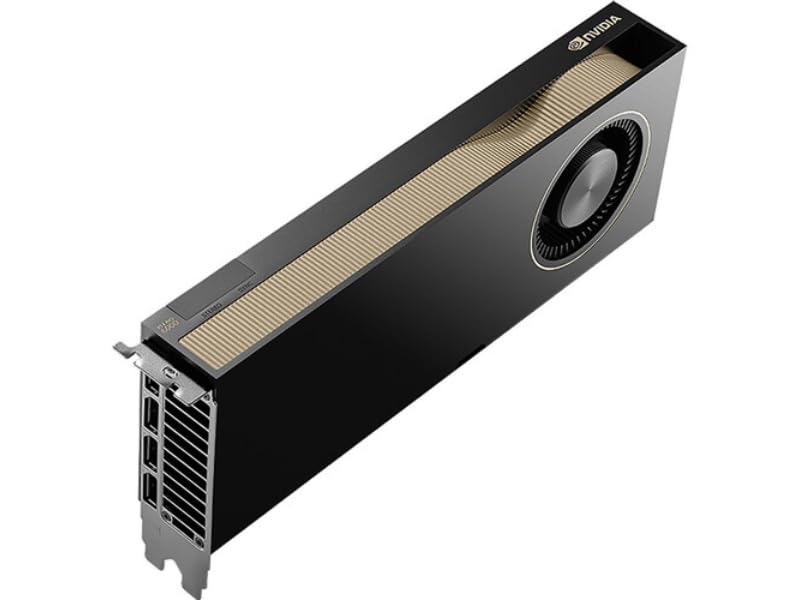
In 2026, the arrival of the Blackwell architecture has fundamentally shifted the AI performance profile. We aren't just looking at faster floating-point operations; we’re looking at massive VRAM pools, like the 96GB found in the PNY Technology VCNRTXPRO6000BQ-PB NVIDIA RTX PRO 6000 Blackwell Max-Q Workstation Graphics Card, which demand unprecedented data ingestion rates.
When you scale this to a full rack, the traditional storage bottlenecks become catastrophic. If your networking fabric can’t feed the NVIDIA H200 NVL accelerators fast enough, your GPUs sit idle in a "wait-state," hemorrhaging capital. Optimizing Blackwell Rack TCO Optimization requires ensuring that every millisecond of GPU time is spent processing, not waiting for a 100GbE link to catch up.
§NVMe-over-Fabric: Eliminating the storage tax
Traditional NAS and basic SAN protocols can't keep up with the 200GbE and 400GbE fabrics utilized in Blackwell environments. NVMe-over-Fabric (NVMe-oF) is the cure. By extending the NVMe protocol across the network, architects can achieve local-disk latencies while maintaining centralized storage efficiency.
For developers working on localized LLM development, powerhouses like the BoxGPT AI Workstation, RTX PRO 6000 Blackwell already integrate high-speed NVMe arrays (2TB+) to ensure the 96GB of Max-Q VRAM is never starved. In a rack environment, this scale is multiplied by a factor of 40, requiring RDMA-capable networking to bypass the CPU and drop data directly into the GPU memory.
Key storage-to-networking advantages:
- Reduced CPU Overhead: Freeing up the 24-core Intel Ultra 9 in systems like the Sentinel Non-RGB RTX PRO 6000 from handling storage interrupts.
- Linear Scaling: Adding storage nodes without increasing latency for the GPU nodes.
- Fabric Flexibility: Moving from InfiniBand to RoCE v2 (RDMA over Converged Ethernet) to lower cost without sacrificing throughput.
§Thermal density and the liquid cooling mandate
Blackwell racks frequently exceed 100kW per cabinet. At this density, traditional air cooling is no longer a viable TCO play—the fans themselves consume a significant percentage of the rack's power budget. Direct-to-Chip (DTC) liquid cooling is the only way to keep high-TDP cards running at peak clock speeds.
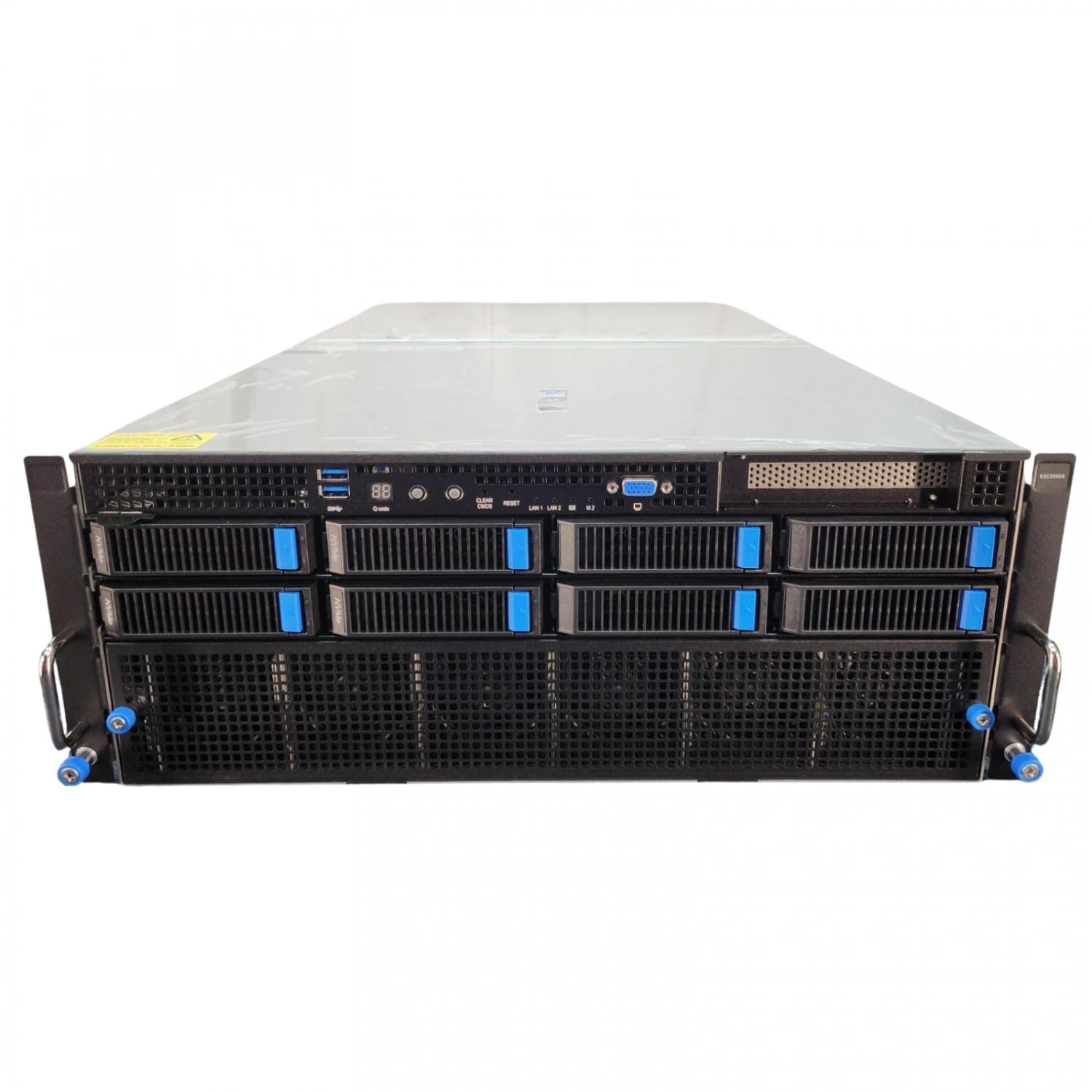
While workstations like the Sentinel Non-RGB RTX PRO 6000 use traditional airflow, enterprise deployments like the ASUS Dual AMD EPYC 9004 Series 4U GPU Server often serve as the blueprint for liquid-cooled rack adaptations. Liquid cooling allows for higher ambient temperatures in the data center, drastically lowering the Power Usage Effectiveness (PUE) and directly impacting the bottom line.
§High-performance hardware comparison
Choosing the right node for your rack affects the overall networking and storage strategy. Below is a look at how different Blackwell and high-end Ada systems compare in the current market.
| Feature | Sentinel Blackwell | BoxGPT Blackwell | ASUS H200 NVL Node |
|---|---|---|---|
| GPU Architecture | Blackwell | Blackwell | Hopper (Reference) |
| VRAM Per Node | 96GB | 96GB (Max 192GB) | 282GB (Dual H200) |
| Networking Support | 10GbE / 2.5GbE | 10GbE / 2.5GbE | NVLink / 400GbE / InfiniBand |
| Cooling Profile | Air (Enterprise Tower) | Air (Optimized Flow) | Air/Liquid Adaptable |
| Storage Base | 12TB NVMe | 2TB NVMe | SAS/SATA/NVMe Hybrid |
§Aligning networking with GPU memory
One often overlooked aspect of TCO is the relationship between the VRAM of a card—like the PNY NVIDIA RTX 6000 ADA at 48GB versus the PNY Technology VCNRTXPRO6000BQ-PB NVIDIA RTX PRO 6000 Blackwell Max-Q at 96GB—and the fabric's ability to clear that memory.
As we push toward multi-thousand node clusters, the networking cost per port starts to rival the compute cost. For architects, the goal is to balance the benchmarks of the new RTX 5090 (seen in the NOVATECH Apex WS9985X) with the networking requirements of 2026-era training sets. If you are running an Apex node for inference, 100GbE might suffice. If you are using the Apex for RAG (Retrieval-Augmented Generation) ingestion, you need a direct path between the 4TB NVMe SSD and the GPU.
§Practical ROI: Beyond the MSRP
When calculating Blackwell Rack TCO Optimization, the sticker price of a PNY Technology VCNRTXPRO6000BQ-PB NVIDIA RTX PRO 6000 Blackwell Max-Q at ~$13,500 is only the beginning.
- Energy Recovery: Modern liquid-cooled racks can redirect heat toward facility-wide heating, potentially reclaiming 20% of thermal costs.
- Storage Consolidation: By using NVMe-oF, organizations can reduce the number of redundant drives across several AI workstations and centralize them into high-density storage nodes.
- Port Density: Using 200GbE switches that support "breakout" cables allows one high-cost switch port to serve multiple Blackwell Max-Q nodes, lowering the per-node cost of high-speed networking.
§FAQ
How does NVMe-over-Fabric actually reduce TCO?
NVMe-oF reduces TCO by eliminating "stranded storage." In a typical rack, some nodes have more storage than they use, while others are full. By virtualizing storage over the fabric, every node—from a BoxGPT AI Workstation to a heavy-duty ASUS server—can tap into a common pool of high-speed data at sub-microsecond latencies, ensuring maximum utilization of expensive NVMe hardware.
Is liquid cooling necessary for the Blackwell Max-Q series?
While the Max-Q architecture is designed for efficiency and can be air-cooled in high-quality towers like the Sentinel Non-RGB RTX PRO 6000, rack-scale density changes the math. Once you stack more than four of these cards in a single chassis, the air around the GPUs gets too hot to effectively cool the VRAM. For multi-node racks, liquid cooling is generally required to maintain TCO by preventing thermal throttling.
What is the advantage of the 96GB VRAM on the Blackwell RTX PRO 6000?
The 96GB VRAM on the PNY Blackwell Max-Q allows for significantly larger batch sizes and more complex models to reside entirely on-card. This reduces the number of times data must be swapped over the PCIe bus, which is a major performance bottleneck for modern LLMs.
§Verdict: The rack is the unit of compute
The era of the "hot-rod" server node is over. In 2026, the rack is the true unit of compute. To achieve real Blackwell Rack TCO Optimization, you must look at the data path from the NVMe array through the 200GbE fabric into the 96GB VRAM of the Blackwell chips.
By prioritizing direct-to-chip liquid cooling and NVMe-oF, you ensure that high-end systems like the ASUS Dual EPYC 9004 series and NOVATECH Apex WS9985X run at their full potential, rather than being throttled by heat or data starvation. Spend on the fabric today, or pay for the idle GPU time tomorrow.
Heads up: AI Hardware Hub may earn a commission when you buy through links on this page. We only recommend gear we'd run ourselves.