The transition to Blackwell-based infrastructures marks a fundamental shift in how enterprise CTOs must view the data center. It’s no longer just about calculating the FP8 TFLOPS of a single node; it’s about managing the violent convergence of high-density storage, 200GbE networking, and radical liquid cooling within the rack. If you ignore the thermal interplay of I/O components, your Blackwell Rack TCO optimization strategy will collapse under the weight of unforeseen cooling overheads and throttled performance.
Heads up: AI Hardware Hub may earn a commission when you buy through links on this page. We only recommend gear we'd run ourselves.
§The 2026 Thermal Reality: Beyond the GPU
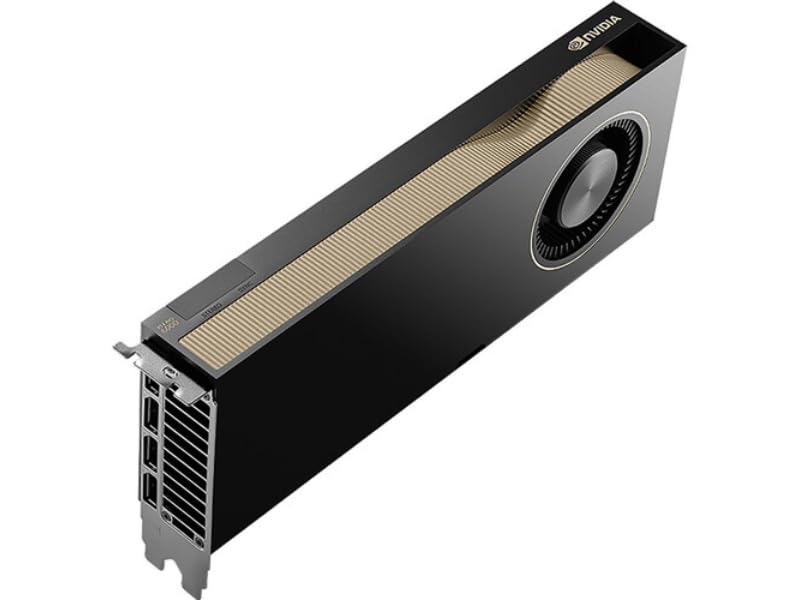
In previous cycles, the GPU was the only fire-breathing dragon in the room. But as we scale into the Blackwell era, the surrounding infrastructure has caught up. To feed a cluster of PNY Technology VCNRTXPRO6000BQ-PB NVIDIA RTX PRO 6000 Blackwell Max-Q units or data-center scale B200s, you need 200GbE (and increasingly 400GbE) fabrics and Gen5 NVMe arrays that generate substantial localized heat.
When these components are packed into high-density racks, the "heat floor" of the server rises. It’s not just about the 300W–700W GPU TDP; it’s about the 25W optical transceivers and the 20W NVMe controllers all fighting for the same chilled air—or more accurately, the same liquid cooling loop.
§NVMe Densities and the Storage Heat Wall
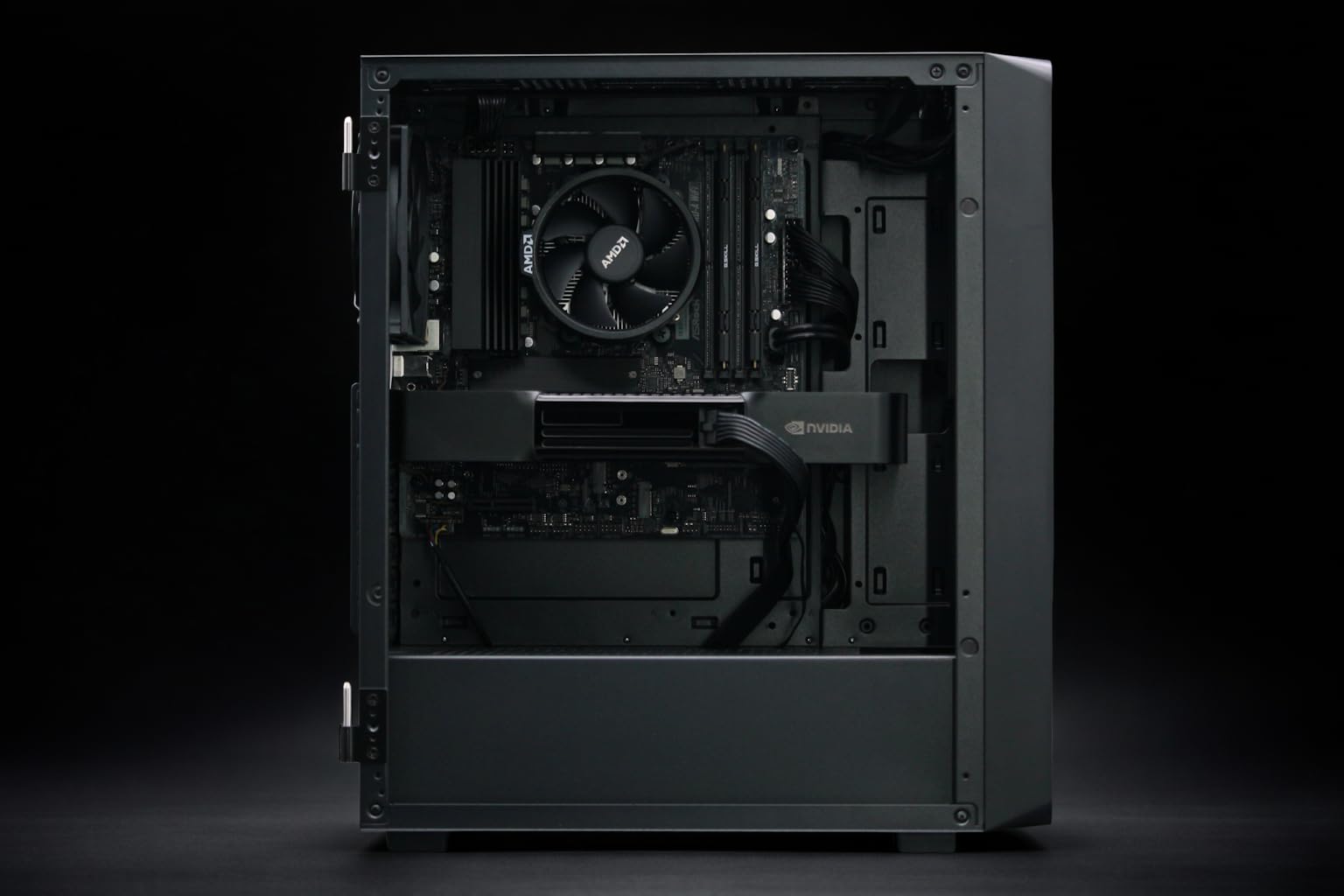
High-performance local storage is mandatory for checkpointing large models and minimizing IO wait times during training. Systems like the Sentinel Non-RGB RTX PRO 6000 utilize triple NVMe arrays to keep up with the data ingest requirements of its 96GB GDDR7 frame buffer.
However, in a rack environment, these SSDs sit directly in the exhaust path of the networking cards. As NVMe temperatures approach 70°C, controllers throttle, causing a massive spike in tail latency. This directly impacts TCO; if your $13,000 GPU is waiting for a throttled SSD to deliver a batch of data, your ROI is hemorrhaging.
§Networking: The Hidden Power Sink
200GbE networking has become the baseline for Blackwell clusters to support GPUDirect RDMA. The physical transceivers (QSFP112) have become small heaters in their own right. When scaling enterprise systems like the ASUS Dual AMD EPYC 9004 Series 4U GPU Server (ESC8000A-E12P), the networking NICs often require dedicated airflow management or integrated cold plates to prevent interference with GPU intake temperatures.
Comparing Thermals Across 2026 Architectures
| Component Type | Legacy Heat Profile (2022) | Blackwell-Era Profile (2026) | Cooling Requirement |
|---|---|---|---|
| GPU | 300W-450W | 700W-1200W+ | Direct-to-Chip Liquid |
| Networking | 10W-15W (100GbE) | 25W-40W (200/400GbE) | Active Air/Liquid |
| NVMe Storage | 7W-9W (Gen4) | 14W-22W+ (Gen5/6) | Heatsink + High CFM |
| VRAM | GDDR6 (Moderate) | GDDR7 / HBM3e (High) | Integrated GPU Cold Plate |
§Modernizing the Rack: Direct-to-Chip (DTC) vs. Immersion
Total Cost of Ownership (TCO) optimization in 2026 hinges on your facility's ability to reject heat. We’ve moved past the era where CRAC (Computer Room Air Conditioning) units could keep up.
- Direct-to-Chip (DTC) Cooling: This is the current gold standard for Blackwell deployments. It targets the GPUs and CPUs, like the dual AMD EPYC processors in the ASUS ESC8000A-E12P, while leaving peripheral cooling to air.
- Rear-Door Heat Exchangers (RDHx): An essential middle ground for facilities not ready for full plumbing, capturing heat before it enters the hot aisle.
- Comprehensive Liquid Loops: For maximum density, even the networking and NVMe trays are being brought into the loop. This is critical when running high-VRAM cards like the PNY NVIDIA RTX 6000 ADA in multi-node configurations where air gaps are non-existent.
§Calculating the "Dark Cost" of Air Cooling
Air cooling a Blackwell rack isn't just inefficient—it’s expensive. The fan power required to move enough air through a 100kW rack can consume up to 15% of the total power budget. By switching to liquid cooling, that overhead drops to roughly 2-3%.
For ML engineers and CTOs, this means you can fit more compute in the same power envelope. Instead of four air-cooled nodes, you might fit seven liquid-cooled nodes, effectively doubling your local benchmarks per square foot of data center space.
§Operational Checklist for Blackwell Success
- Audit your PUE: Power Usage Effectiveness is the primary metric. If your PUE is over 1.4, you’re losing money on legacy cooling.
- Right-size your VRAM: Don't buy H100s for tasks that a PNY Technology VCNRTXPRO6000BQ-PB can handle. The 96GB buffer on Blackwell Max-Q cards offers a superior "performance per watt" ratio.
- Invest in Gen5 NVMe Cooling: Ensure your AI workstations or servers have dedicated active cooling for the M.2/U.3 slots.
- Path to 400GbE: Even if you start at 200GbE, ensure your thermal solution can handle the 40W per-port draw of tomorrow's interconnects.
§FAQ
Does Blackwell require a complete data center retrofit?
Not necessarily, but it requires a change in rack strategy. While individual nodes like the BoxGPT AI Workstation work on standard power, full Blackwell racks often exceed 40kW, necessitating liquid cooling or specialized power distribution units (PDUs).
Why is 200GbE networking creating thermal issues?
High-speed networking relies on optical transceivers that convert electricity to light. This process is energy-intensive and produces significant heat in a very small form factor, often "pre-heating" the air before it reaches the AI GPUs.
Is the PNY RTX 6000 Ada still viable in 2026?
Yes. While the Blackwell architecture is the new flagship, the PNY NVIDIA RTX 6000 ADA remains a powerhouse for workstation-class tasks where the extreme density of a Blackwell rack isn't required. Its 48GB VRAM is still highly effective for fine-tuning smaller models.
§The Bottom Line
Blackwell Rack TCO optimization isn't a "set and forget" hardware purchase. It’s a delicate balance of managing the heat generated by every link in the data chain—from the NVMe where the data starts, through the 200GbE fabric, to the Blackwell cores that process it. CTOs who prioritize integrated thermal management today will avoid the performance throttling and massive electricity bills of tomorrow.
Heads up: AI Hardware Hub may earn a commission when you buy through links on this page. We only recommend gear we'd run ourselves.