Scaling frontier models like DeepSeek-V3 or the newly minted Llama-4 requires more than just raw compute; it demands a strategic choice between memory bandwidth and total capacity. While GDDR7-based consumer rigs offer an affordable entry point for quantized 4-bit experimentation, the jump to HBM3e enterprise systems is mandatory for those who cannot tolerate the "intelligence tax" of heavy compression. Today, we're breaking down the DeepSeek-V3 local hardware requirements to help you decide where to invest your capital.
Heads up: AI Hardware Hub may earn a commission when you buy through links on this page. We only recommend gear we'd run ourselves.

§The VRAM crunch: Why DeepSeek-V3 changes the math
DeepSeek-V3 is a behemoth. With 671 billion parameters (though only about 37 billion are active per token thanks to its MoE architecture), the sheer footprint of the model weights is the primary bottleneck. If you're running the FP8 version, you're looking at nearly 700GB of VRAM. For most ML engineers, that's a non-starter for a local workstation.
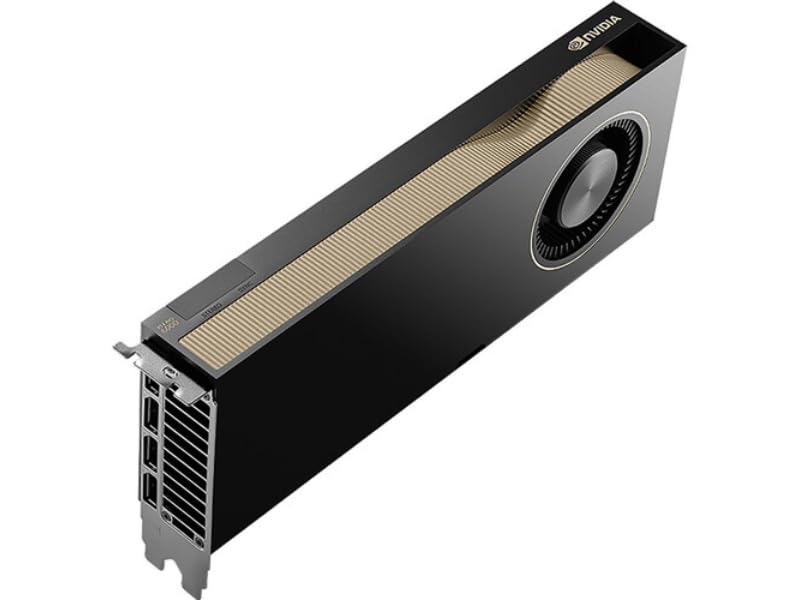
This is where the DeepSeek-V3 local hardware requirements become a game of trade-offs. To fit this on a desktop, you're either looking at extreme 4-bit quantization (GGUF or EXL2) to squeeze it into a multi-GPU setup, or you're scaling up to professional-grade Blackwell silicon. The difference between the 32GB found on the ASUS ROG Astral NVIDIA GeForce RTX 5090 32GB GDDR7 OC Edition Gaming Graphics Card and the 96GB on a PNY Technology VCNRTXPRO6000BQ-PB NVIDIA RTX PRO 6000 Blackwell Max-Q Workstation Graphics Card isn't just about capacity—it's about how many "splits" your model requires across the PCIe bus.
§GDDR7 vs. HBM3e: The performance gap
Consumer cards like the ASUS ROG Astral NVIDIA GeForce RTX 5090 utilize GDDR7, which is incredibly fast for gaming but lacks the massive bus width of HBM3e. When you are running inference on a 671B model, the "Time to First Token" is often dictated by how fast the weights can be swept through the memory bus.
- GDDR7 (RTX 5090): Excellent for 4-bit quantized versions of Llama-4 (70B) or DeepSeek-V3 MoE. You'll likely need two to four of these in a NOVATECH Apex WS9985X AI Workstation & Gaming PC to handle the 671B model at usable speeds.
- HBM3e (H200 NVL): This is the gold standard. Found in enterprise systems like the ASUS Dual AMD EPYC 9004 Series 4U GPU Server (ESC8000A-E12P), HBM3e provides the bandwidth necessary to run FP8 or even BF16 precision without the massive latency spikes seen on consumer hardware.
§Choosing your workstation: Blackwell vs. Ada
If you're building a local rig today, the choice usually comes down to the newer Blackwell architecture versus the tried-and-true Ada Lovelace generation. The PNY NVIDIA RTX 6000 ADA has been the workhorse of the industry with its 48GB of VRAM, but it's increasingly being eclipsed by the massive 96GB frame buffer of the PNY Technology VCNRTXPRO6000BQ-PB NVIDIA RTX PRO 6000 Blackwell Max-Q Workstation Graphics Card.
| GPU Model | VRAM | Memory Type | Architecture | Best Use Case |
|---|---|---|---|---|
| RTX 5090 | 32GB | GDDR7 | Blackwell | 4-bit inference, Llama-4 70B |
| RTX 6000 Ada | 48GB | GDDR6 | Ada Lovelace | Stable Diffusion, CAD, 8-bit LLMs |
| RTX PRO 6000 Blackwell | 96GB | GDDR7 | Blackwell | Finetuning, 6-bit DeepSeek-V3 |
| H200 NVL | 141GB | HBM3e | Hopper/Blackwell | Enterprise Production, FP16 Inference |
For most ML engineers, a dual-GPU setup in a pre-configured machine like the BoxGPT AI Workstation offers the best balance. With two Blackwell 96GB cards, you have 192GB of VRAM—enough to run DeepSeek-V3 at a very high quality 4-bit or 5-bit quantization with room for a long context window.
§The "Quantization Tax" and why it matters
When we talk about DeepSeek-V3 local hardware requirements, we can't ignore the quality loss. A 4-bit GGUF model is significantly "dumber" than the original FP8 weights. If your use case involves complex coding or mathematical reasoning, the 4-bit loss is noticeable.
To bridge this gap, you either need more VRAM to run higher bits (e.g., 6-bit or 8-bit) or you need the HBM memory speeds that help mitigate the overhead of complex sampling methods. Older enterprise cards like the A100 80GB Graphics Card are still popular on the secondary market because their HBM2e memory is often more stable for long-running training jobs than consumer GDDR cards, even if the raw TFLOPS are lower than a 5090.
§Building for the future: Llama-4 and beyond
Llama-4 is expected to push context windows even further. Context is VRAM-heavy. While the ASUS ROG Astral NVIDIA GeForce RTX 5090 is a beast, its 32GB limit can be reached quickly if you're feeding it 128k context tokens.
For a future-proof setup, enterprise AI workstations that support high-wattage GPUs and massive system RAM (like the 256GB found in the NOVATECH Apex WS9985X) are becoming the standard. This allows for "offloading" layers to system RAM if you absolutely run out of VRAM, though expect a massive performance hit.

§Verdict: Which path should you take?
If you are a solo developer or a hobbyist, go for the ASUS ROG Astral NVIDIA GeForce RTX 5090 32GB GDDR7 OC Edition Gaming Graphics Card. It's the most cost-effective way to get high-speed GDDR7 memory. Just be prepared to hunt for the latest GGUF quants to make DeepSeek-V3 fit.
If you are a professional researcher or a startup fine-tuning frontier models, the BoxGPT AI Workstation with its dual 96GB Blackwell cards is the "sweet spot" for 2026. You get nearly 200GB of VRAM without the $80,000 price tag of a full server.
For production-grade inference where uptime and precision are non-negotiable? The ASUS Dual AMD EPYC 9004 Series 4U GPU Server (ESC8000A-E12P) is the only real choice. The HBM3e bandwidth ensures that Llama-4 and DeepSeek-V3 run at speeds that won't leave your users waiting.
FAQ
How much VRAM do I need for DeepSeek-V3?
To run the full FP8 version, you'll need roughly 700GB of VRAM. However, for local machines, a 4-bit quantized version can fit into ~160GB-192GB of VRAM, which is achievable with two PNY RTX PRO 6000 Blackwell cards.
Is GDDR7 significantly better than GDDR6X for AI?
Yes. GDDR7 offers higher bandwidth and improved power efficiency, which reduces the thermal throttling often seen in multi-GPU setups during long inference or training runs. It helps close the gap with HBM, though HBM still dominates in bus width.
Can I run DeepSeek-V3 on a single RTX 5090?
Only in a very heavily compressed state (like 1.5-bit or 2-bit quantization). At those levels, the model's logic and coherence are significantly degraded. For a quality experience, you need at least 128GB of total VRAM across multiple cards.
Why is HBM3e so expensive?
HBM3e uses a complex 3D stacking process and resides on the same package as the GPU die, allowing for astronomical bandwidth (up to 4.8 TB/s on modern chips). This proximity and manufacturing complexity drive the price, as seen in the H200 NVL servers.
Heads up: AI Hardware Hub may earn a commission when you buy through links on this page. We only recommend gear we'd run ourselves. Check out our latest GPU benchmarks to see these cards in action.