The choice between consumer GDDR7 and enterprise HBM3e is no longer just about budget; it’s a tactical decision regarding model fidelity and token velocity. As Llama-4 and DeepSeek-V3 push the boundaries of local inference, engineers must decide if they value the raw speed of high-clocked consumer silicon or the massive, uncompromised memory pools of workstation units. This guide breaks down why memory architecture is the ultimate bottleneck in 2026 and how to choose your hardware based on your quantization tolerance.
Heads up: AI Hardware Hub may earn a commission when you buy through links on this page. We only recommend gear we'd run ourselves.
§The memory wall: Why architecture matters for Llama-4
In 2026, the "Memory Wall" isn't a theoretical concept—it’s a daily frustration. When running the latest 100B+ parameter models, your GPU's memory architecture dictates two things: how fast the model thinks (bandwidth) and how much it forgets (capacity/quantization).
GDDR7, found in the latest NVIDIA Blackwell consumer cards, offers a massive leap in pin speed, hitting upwards of 32 Gbps. This makes it incredible for high-speed token generation on smaller, highly optimized models. However, HBM3e (High Bandwidth Memory) takes a different approach: it stacks memory vertically on the GPU die. This allows for massive 1.2 TB/s+ bandwidth and, more importantly, huge capacities like the 141GB found in the ASUS Dual AMD EPYC 9004 Series 4U GPU Server (ESC8000A-E12P) with 2x NVIDIA H200 NVL 141GB GPUs.
For local ML engineers, the trade-off is clear: GDDR7 is for the "speed-demons" running 4-bit quants, while HBM3e is for those who refuse to compromise on weights.
§GDDR7: The high-speed choice for quantized workflows
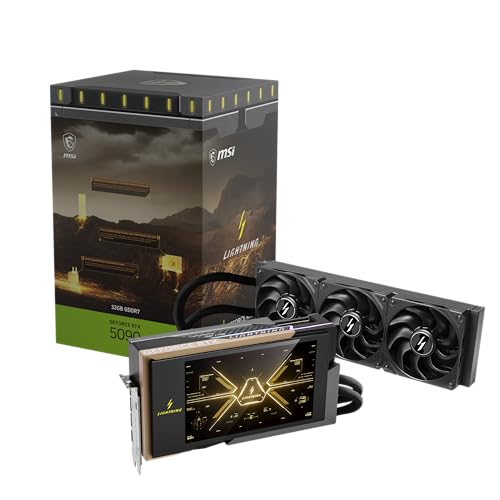
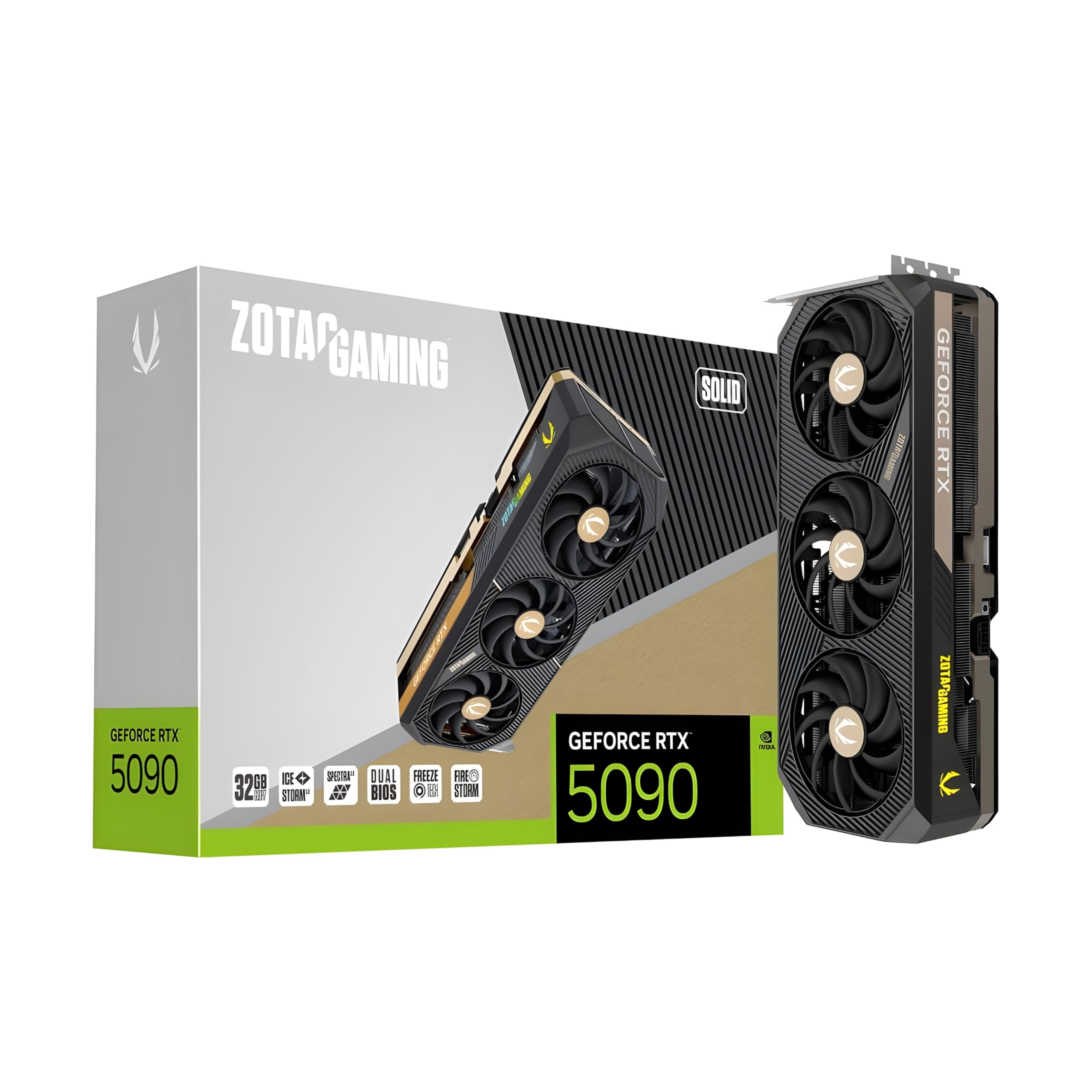
Consumer cards like the ZOTAC Gaming GeForce RTX 5090 Solid 32GB GDDR7 Reflex 2 RTX AI DLSS4 or the MSI Gaming RTX 5090 32G Lightning Z Graphics Card have democratized 32GB VRAM buffers. With GDDR7, the latency is low and the clock speeds are high.
If you are running Llama-4 70B using 4-bit (bitsandbytes) or the newer 3-bit GGUF quants, a dual-5090 setup provides roughly 64GB of VRAM. This is plenty for most creative tasks. The advantage here is tokens per second (TPS). Because GDDR7 is so fast, the "time to first token" is significantly lower than previous generations.
However, the bottleneck remains the PCIe bus and the limited 32GB per card. Even an ASUS SFF-Ready Prime NVIDIA GeForce RTX 5070 Ti 16GB GDDR7 Graphics Card is limited by its capacity when you try to load context-heavy DeepSeek kernels. You simply cannot fit the full-precision weights.
§HBM3e: The king of capacity and reasoning
When you move to the workstation and enterprise tier, the conversation shifts from "How fast?" to "How big?". Units featuring HBM3e are designed to move massive amounts of data in parallel.
The PNY Technology VCNRTXPRO6000BQ-PB NVIDIA RTX PRO 6000 Blackwell Max-Q Workstation Graphics Card packs a staggering 96GB of VRAM. This isn't just about "more"; it's about "better." With 96GB, you can run large LLMs at FP16 or high-bit quants (8-bit) without splitting weights across slow system memory.
Why this matters for DeepSeek and Llama-4:
- Reduced Perplexity: Heavy quantization (sub 4-bit) often introduces "brain fog" in models, where they lose the ability to follow complex logic. HBM3e allows you to stay at higher precision.
- Context Window: Long-context windows (128k+) eat VRAM for breakfast. 32GB on a GDDR7 card disappears quickly when the KV cache fills up.
- Stability: Enterprise systems like the BoxGPT AI Workstation, RTX PRO 6000 Blackwell are built for 24/7 inference without the thermal throttling common in consumer gaming cards.
§Comparison: GDDR7 vs. HBM3e for Inference
| Feature | GDDR7 (Consumer) | HBM3e (Enterprise/Workstation) |
|---|---|---|
| Typical Capacity | 16GB - 32GB | 96GB - 141GB+ |
| Peak Bandwidth | ~1.5 TB/s (RTX 5090) | ~4.8 TB/s (H100/H200) |
| Best For | Quantized 4-bit inference, Gaming | Full-precision reasoning, Fine-tuning |
| Cost per GB | Medium ($30 - $130/GB) | High ($140 - $500/GB) |
| Form Factor | Large air-cooled (3-4 slots) | Optimized blower or Rack-mount |
§The "Developer-to-Device" tactical approach
Choosing a card requires looking at your specific ML objectives. Are you a researcher or a deployer?
- The Prototyper: If you're mainly building UIs, RAG pipelines, or small-scale agents, go for the ZOTAC Gaming GeForce RTX 5090 Solid 32GB GDDR7. It's the best value for benchmarks in 2026.
- The Heavyweight: If you're hosting local Llama-4 400B (quantized) or running medical/legal models where reasoning errors are non-negotiable, the BoxGPT AI Workstation is the gold standard.
- The Enterprise Scaler: For organizations needing to train or serve multiple concurrent users, the ASUS ESC8000A-E12P 2x H200 NVL provides the HBM3e throughput required to keep latency low for hundreds of users.
§Building around the architecture
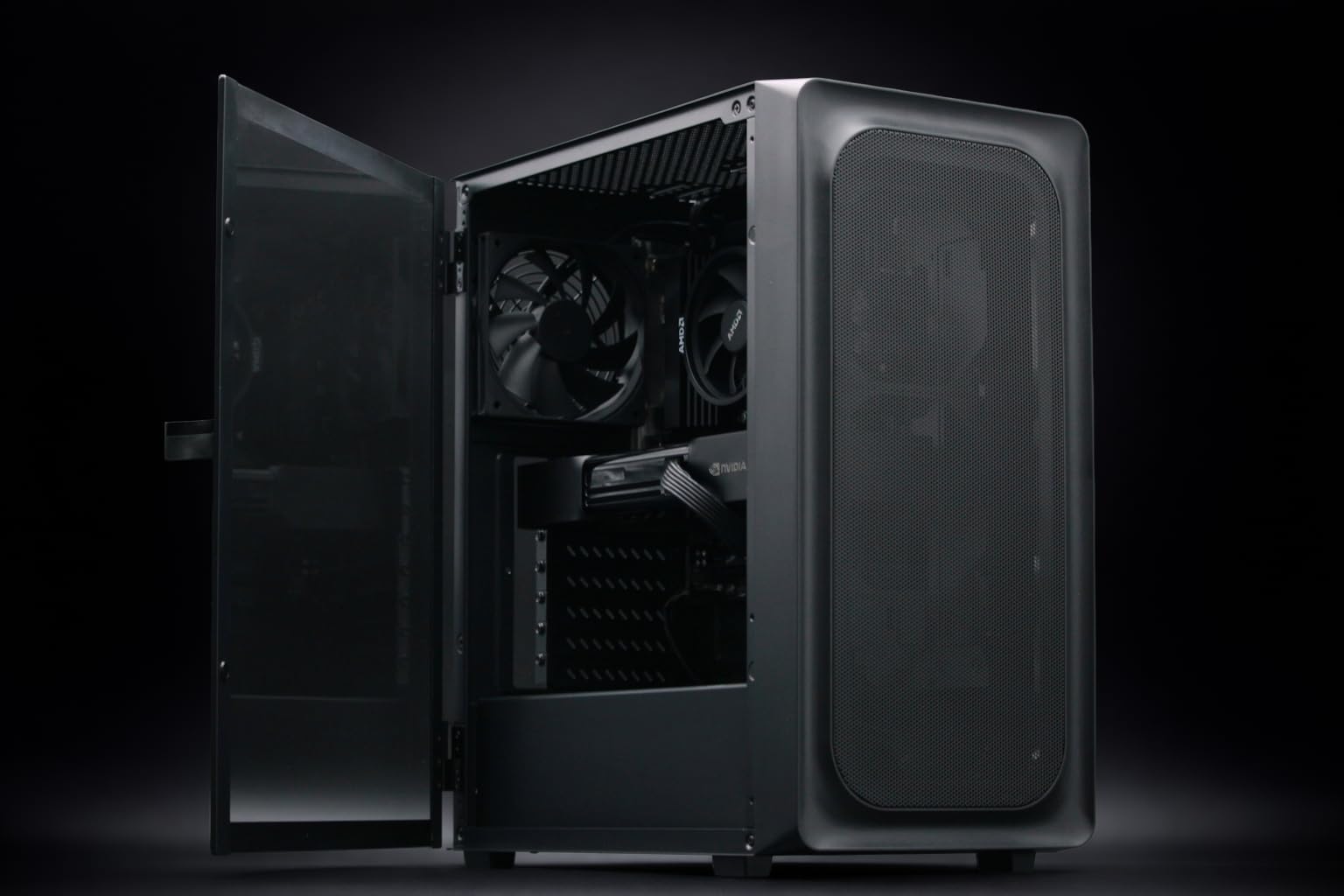
It isn't just about the GPU. If you choose a high-capacity workstation card, you need a host system that won't choke. The NOVATECH Apex WS9985X AI Workstation balances this by pairing the 5090 with 256GB of DDR5 system RAM, ensuring that even if you overflow the VRAM, your swap speeds don't plummet to a crawl. Check out our categories/ai-workstations for more pre-built options that handle these architectures elegantly.
§FAQ
Does GDDR7 make a difference in LLM inference speed?
Yes. GDDR7's increased bandwidth leads to higher tokens per second (TPS) on models that fit within the VRAM. Compared to GDDR6X, you'll see a noticeable reduction in generation time for 8B and 70B models.
Can I run DeepSeek-V3 on a 32GB GDDR7 card?
Only with heavy quantization. DeepSeek-V3 is a massive model; to run it smoothly without offloading to slower system RAM, you would need a multi-GPU setup or a high-capacity workstation card like the NVIDIA RTX PRO 6000 Blackwell 96GB.
Why is HBM3e so much more expensive than GDDR7?
HBM3e uses a complex 3D-stacking manufacturing process and sits directly on the same package as the GPU silicon. This proximity reduces power consumption and maximizes bandwidth, but the yields are lower and the production costs are significantly higher than traditional GDDR modules.
§Verdict: Which one should you buy?
If your work revolves around speed and iterative development with quantized models, stick with GDDR7 cards. The MSI Gaming RTX 5090 32G Lightning Z is an absolute beast for this.
However, if your work involves uncompromising reasoning, long context lengths, or model fine-tuning, you need the capacity that only HBM3e or high-bin workstation cards can provide. Investing in a PNY NVIDIA RTX PRO 6000 Blackwell will save you more time in the long run by avoiding the "quantization quality tax."
Heads up: AI Hardware Hub may earn a commission when you buy through links on this page. We only recommend gear we'd run ourselves.