For local ML engineers in 2026, the choice between consumer-grade GDDR7 and enterprise HBM3e is no longer just about budget—it’s about the "performance cliff" of quantization. While a multi-GPU array of consumer cards offers massive raw throughput, the transition to HBM3e-based enterprise hardware is the only way to maintain the full-precision reasoning required for high-stakes production models. Local inference speed is now a battle between memory bandwidth and bit-precision integrity.
Heads up: AI Hardware Hub may earn a commission when you buy through links on this page. We only recommend gear we'd run ourselves.
§The quantization tax: Why GDDR7 hits a wall
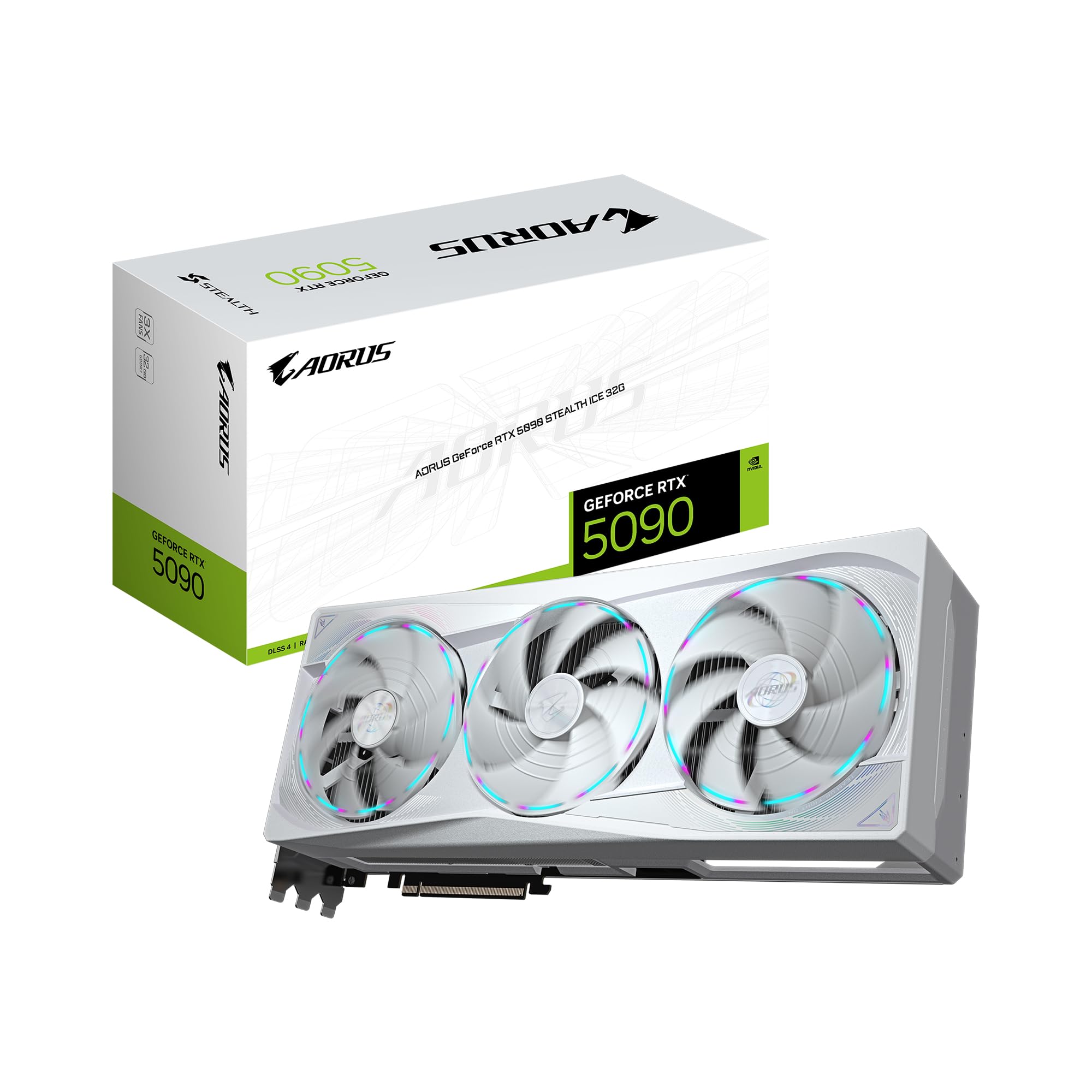
In the current 2026 landscape, the GIGABYTE AORUS GeForce RTX 5090 Stealth ICE 32G represents the pinnacle of GDDR7 technology. With the Blackwell architecture's leap in efficiency, these consumer cards are incredibly fast for 4-bit and 6-bit quantized models. However, ML engineers are increasingly finding that specific reasoning tasks—particularly in code generation and mathematical proofing—suffer a non-linear "intelligence hit" when squeezed into low-bit formats.
GDDR7 provides the bandwidth to move data quickly, but consumer cards like the ASUS ROG Astral NVIDIA GeForce RTX 5090 32GB GDDR7 LP are physically limited by their 32GB VRAM buffers. To run a 70B parameter model locally on these chips, you must quantize. When you do, you aren't just saving space; you’re introducing noise. If your project requires FP16 or BF16 precision for fine-tuning or sensitive reasoning, the consumer path leads to a multi-GPU headache that still can't match the unified memory benefits of HBM3e.
§Understanding the GDDR7 vs HBM3e inference speed gap
The fundamental trade-off lies in how these memory types handle "tokens per second" (t/s) versus "total model weight."
- GDDR7 (Graphics Double Data Rate 7): Found in the ZOTAC GeForce RTX 5090 Solid OC, this memory is optimized for high-frequency bursts. It’s brilliant for smaller models (8B to 30B) or highly compressed larger ones.
- HBM3e (High Bandwidth Memory 3e): Found in enterprise giants like the H200 NVL, this memory is stacked vertically on the GPU die. It offers significantly wider bus widths and lower power consumption per gigabyte transferred.
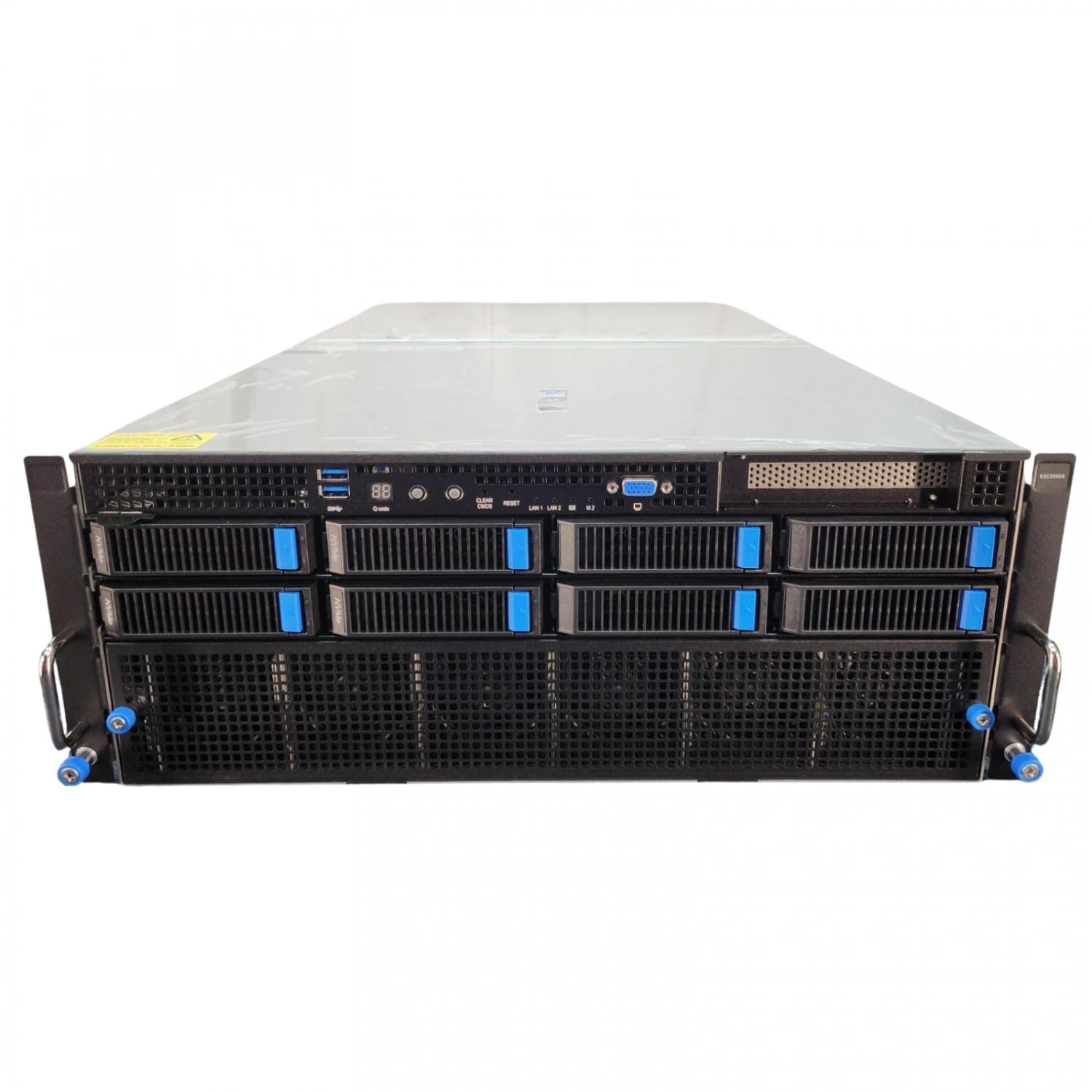
When you move to an enterprise system like the ASUS ESC8000A-E12P with 2x H200 NVL, you aren't just getting 141GB of VRAM; you're getting memory bandwidth that often exceeds 4.8 TB/s. This allows for full-precision reasoning (FP16) on massive models without the latency spikes common in multi-GPU consumer setups using PCIe-only interconnects.
§Comparing hardware for local ML workflows
| Feature | Consumer RTX 5090 (GDDR7) | Enterprise RTX PRO 6000 (Blackwell) | Data Center H200 NVL (HBM3e) |
|---|---|---|---|
| VRAM Capacity | 32GB | 96GB | 141GB |
| Ideal Quantization | 4-bit / 6-bit (GGUF/EXL2) | 8-bit / FP16 | FP16 / FP32 |
| Interconnect | PCIe 5.0 (Standard) | NVLink Compatible | NVLink / NVSwitch |
| Primary Use Case | Local Prototyping | Heavy Workstation Dev | Large Scale Production |
| Example System | Iron Bull AI Workstation | BoxGPT AI Workstation | ASUS ESC8000A Server |
§The "Workstation Middle Ground": RTX PRO 6000 Blackwell
For many ML engineers, the jump to a $77,000 server is overkill, but the 32GB limit of a single RTX 5090 is too restrictive. This is where professional cards like the PNY NVIDIA RTX PRO 6000 Blackwell come into play.
With 96GB of VRAM, the PRO 6000 Blackwell allows you to run even the beefiest 70B models at FP16 precision on a single card. Systems like the BoxGPT AI Workstation pair these cards with high-performance CPUs and massive system RAM to ensure the data pipeline never chokes. While the memory itself is GDDR-based (optimized for workstation stability), the sheer volume allows you to avoid the quantization "intelligence tax" that plagues the consumer 5090.
§Thermal and architectural constraints
Building a multi-GPU 5090 rig sounds great on paper until you try to cool four 450W+ cards. The Cloud Ninjas Iron Bull AI Workstation solves this with custom enterprise-grade airflow, but it remains a GDDR7 environment. If you need to scale beyond two cards, the lack of high-speed NVLink bridges on consumer silicon means you’ll face a massive performance hit during inter-GPU communication—a bottleneck HBM3e systems don't have.
If your daily work involves training adapters (LoRAs) or running complex RAG pipelines where precision is paramount, the HBM3e bandwidth in the H200 NVL provides a level of deterministic output that consumer cards simply struggle to replicate at speed.
§How to choose your local AI stack
If you're unsure which path to take, ask yourself these three questions:
- What is my must-run model size? If it’s under 30B, go with a 5090 like the ASUS ROG Astral.
- Is quantization acceptable? If your benchmarks show a 5% drop in logic accuracy at 4-bit, and that 5% kills your product's value, you need the 96GB buffer of the RTX PRO 6000 Blackwell.
- Are you scaling to a team? If you are providing inference for 10+ developers, the HBM3e bandwidth in an enterprise server is the only way to maintain high throughput without individual workstation bottlenecks.
Check our full GPU architecture breakdown and latest performance benchmarks to see how the newest Blackwell chips handle the latest LLM iterations.
FAQ
Does GDDR7 vs HBM3e inference speed matter for RAG?
Yes. Retrieval-Augmented Generation (RAG) often involves processing long context windows. HBM3e’s massive bandwidth allows for faster processing of these large "prompts" (prefill speed), reducing the time the user spends waiting for the first token.
Can I link four RTX 5090s to act like one HBM3e card?
Not exactly. While tools like DeepSpeed can split a model across four cards, the communication between them is limited by the PCIe bus. An HBM3e card like the H200 has the memory internal to the package, and multi-GPU enterprise setups use NVLink/NVSwitch, which is significantly faster than the PCIe lanes found on a ZOTAC RTX 5090.
Is the RTX PRO 6000 Blackwell worth the $13,000+ price tag?
For professional engineers, usually yes. The 96GB VRAM on the PNY RTX PRO 6000 allows for development workflows that are impossible on 32GB consumer cards, such as high-precision fine-tuning or running large-scale vision-language models without aggressive quantization.
§The bottom line
If you are optimizing for cost and running quantized models for hobbyist or light-pro use, the consumer GDDR7 route—led by the GIGABYTE RTX 5090 Stealth ICE—is a value powerhouse. But if your goal is zero-compromise local ML engineering, the move to HBM3e via the ASUS H200 NVL system or at least a 96GB RTX PRO 6000 workstation is the only way to avoid the performance and intelligence cliff of quantization.
Heads up: AI Hardware Hub may earn a commission when you buy through links on this page. We only recommend gear we'd run ourselves.