With the release of Llama-4, the hardware requirements for local inference have shifted from "enthusiast-level" to "infrastructure-grade." Choosing between GDDR7-based consumer cards and HBM3e-equipped enterprise silicon isn't just about memory capacity; it's a fundamental trade-off between the latency required for real-time agents and the throughput needed for massive batch processing. For ML engineers running the 405B variant, the bottleneck is no longer the compute—it’s how fast you can feed the weights to the registers.
Heads up: AI Hardware Hub may earn a commission when you buy through links on this page. We only recommend gear we'd run ourselves.

§The memory wall: GDDR7 vs HBM3e for Llama-4 inference
The architectural divide in 2026 is clear. GDDR7, debuting in cards like the ASUS ROG Astral NVIDIA GeForce RTX 5090 32GB GDDR7 OC Edition Gaming Graphics Card, relies on high clock speeds and PAM3 encoding to achieve massive bandwidth. It’s snappy and responsive. Conversely, HBM3e (High Bandwidth Memory 3e), found in monsters like the ASUS Dual AMD EPYC 9004 Series 4U GPU Server (ESC8000A-E12P) with 2x NVIDIA H200 NVL 141GB GPUs, uses a 3D-stacked architecture.
If you’re running Llama-4 405B, you’re looking at a model that requires roughly 240GB of VRAM just to load at 4-bit quantization (QUIP# or GGUF). Achieving this on GDDR7 requires a multi-GPU cluster, whereas a single node of H200 NVL can handle it with room for a massive KV cache.
§Latency: Why GDDR7 wins for single-user agents
For local developers building autonomous coding agents or voice assistants, time-to-first-token (TTFT) and tokens-per-second (TPS) for a single user are the metrics that matter. This is where the ASUS ROG Astral NVIDIA GeForce RTX 5090 32GB GDDR7 OC Edition Gaming Graphics Card shines.
GDDR7’s higher frequency and lower access latency mean that for small batch sizes (Batch=1), the "snappiness" of the model is superior to older HBM implementations. When you're testing code in real-time, the difference between 15 TPS and 25 TPS is the difference between a tool that feels alive and one that feels broken. Systems like the NOVATECH Apex WS9985X AI Workstation & Gaming PC – AMD Ryzen Threadripper PRO 9985WX, RTX 5090 32GB, 256GB DDR5, 4TB NVMe SSD leverage this high-frequency memory to provide an unparalleled developer experience, even if you have to chain 8 GPUs together to fit the 405B model.
§Throughput: The HBM3e advantage for Llama-4 405B
If your goal is to serve an entire department or run long-context batch analysis on thousands of documents, GDDR7 becomes a bottleneck. The ASUS Dual AMD EPYC 9004 Series 4U GPU Server (ESC8000A-E12P) with 2x NVIDIA H200 NVL 141GB GPUs provides a wider data bus.
HBM3e isn't about the speed of a single lane; it's about having 4,096 lanes running in parallel. This massive throughput allows the GPU to maintain high performance even as the batch size increases. For Llama-4 405B, which is incredibly parameter-heavy, HBM3e’s ability to move 4.8 TB/s of data is the only way to avoid "compute starvation."
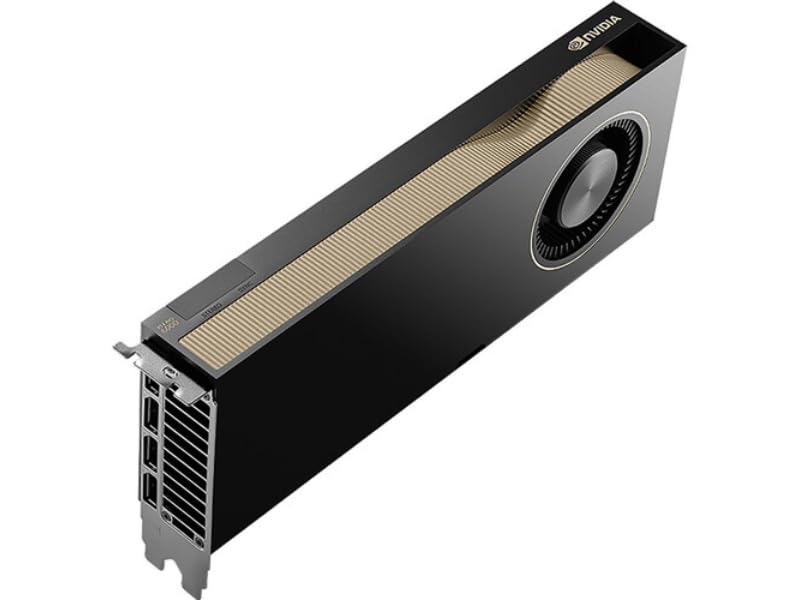
§Performance Comparison: Local Llama-4 405B Inference
| Hardware Platform | Memory Type | Total VRAM | Ideal Use Case | Relative Latency (B=1) |
|---|---|---|---|---|
| ASUS ROG Astral RTX 5090 | GDDR7 | 32GB | Real-time agents (Single GPU) | Ultra-Low |
| BoxGPT AI Workstation Blackwell 6000 | GDDR7 (High Density) | 192GB (Dual) | Large Model Dev / Prototyping | Low |
| A100 80GB Graphics Card | HBM2e | 80GB | Legacy Batch Processing | Medium |
| H200 NVL Dual Server | HBM3e | 282GB (Total) | Enterprise Serving / High Throughput | Low (High Parallelism) |
§Scaling to 405B: The workstation approach
Most ML engineers don't have a 4U rack in their home office. For local runs of Llama-4 405B, the strategy is usually "memory pooling." Using a system like the BoxGPT AI Workstation, RTX PRO 6000 Blackwell, 96GB VRAM, Ryzen 9900X, 256GB DDR5, 2TB NVMe allows you to bridge multiple high-capacity cards.
The advantages of this setup include:
- Ready-to-run environments: Pre-installed tools like Ollama and ComfyUI.
- VRAM Density: The PNY Technology VCNRTXPRO6000BQ-PB NVIDIA RTX PRO 6000 Blackwell Max-Q Workstation Graphics Card provides 96GB on a single PCB, making it possible to fit 405B in a 3-card workstation.
- Power Efficiency: The Blackwell Max-Q architecture is optimized for sustained local benchmarks without tripping a standard 15A circuit breaker.
If 96GB is overkill for your current project, the BoxGPT AI Workstation, RTX PRO 5000 Blackwell, 48GB VRAM, Ryzen 9700X, 64GB DDR5, 2TB NVMe offers a phenomenal entry point for Llama-4 70B runs with perfect low-latency response.
§Why "Old" HBM still matters
You might see the A100 80GB Graphics Card - 80 GB HBM2e ECC and think it's obsolete. It isn't. While GDDR7 has higher clock speeds, the HBM2e on the A100 offers ECC (Error Correction Code) and a memory bus width that GDDR consumer cards simply cannot match. For long-running fine-tuning jobs on Llama-4 where data integrity is paramount, an A100 80GB Graphics Card - 80 GB HBM2e ECC is still a workhorse. Check our /categories/ai-gpus section for current availability on these reliable enterprise units.
§The Bottom Line: Which should you choose?
If you are a solo developer building an AI application where the user expects an instant response, stick with GDDR7. The ASUS ROG Astral NVIDIA GeForce RTX 5090 32GB GDDR7 OC Edition Gaming Graphics Card provides the highest "tokens-per-second-per-dollar" for single-user workloads.
However, if you are an infrastructure head at a startup or a tech lead deploying Llama-4 405B as a shared internal service, HBM3e is non-negotiable. The throughput capacity of the ASUS Dual AMD EPYC 9004 Series 4U GPU Server (ESC8000A-E12P) with 2x NVIDIA H200 NVL 141GB GPUs ensures that your system won't crawl to a halt when the tenth person joins the chat.
FAQ
Does GDDR7 make Llama-4 faster than HBM3e?
In single-user scenarios (batch size 1), GDDR7 can offer lower latency (faster time-to-first-token) because of its higher raw clock speeds. However, for large batches or high-concurrency workloads, HBM3e is significantly faster due to its massive memory bus width.
How many RTX 5090s do I need for Llama-4 405B?
To run Llama-4 405B at 4-bit quantization, you need roughly 240GB of VRAM. Using the ASUS ROG Astral NVIDIA GeForce RTX 5090 32GB GDDR7 OC Edition Gaming Graphics Card, you would need 8 GPUs. For a more compact setup, look at the 96GB PNY Technology VCNRTXPRO6000BQ-PB NVIDIA RTX PRO 6000 Blackwell Max-Q Workstation Graphics Card, where you only need 3 cards.
Is the A100 still worth it for Llama-4 in 2026?
Yes, specifically for fine-tuning or long-context tasks where ECC memory is critical. While it lacks the sheer speed of the H200, the A100 80GB Graphics Card - 80 GB HBM2e ECC is now a cost-effective way to get 80GB of high-bus-width memory.
Can I run Llama-4 405B on a single workstation?
Yes, but you need professional-grade GPUs. A BoxGPT AI Workstation, RTX PRO 6000 Blackwell, 96GB VRAM, Ryzen 9900X, 256GB DDR5, 2TB NVMe can be configured with enough VRAM to handle the model locally, provided you use sufficient quantization.
Heads up: AI Hardware Hub may earn a commission when you buy through links on this page. We only recommend gear we'd run ourselves. Explore our full range of /categories/ai-workstations to find your perfect Llama-4 rig.