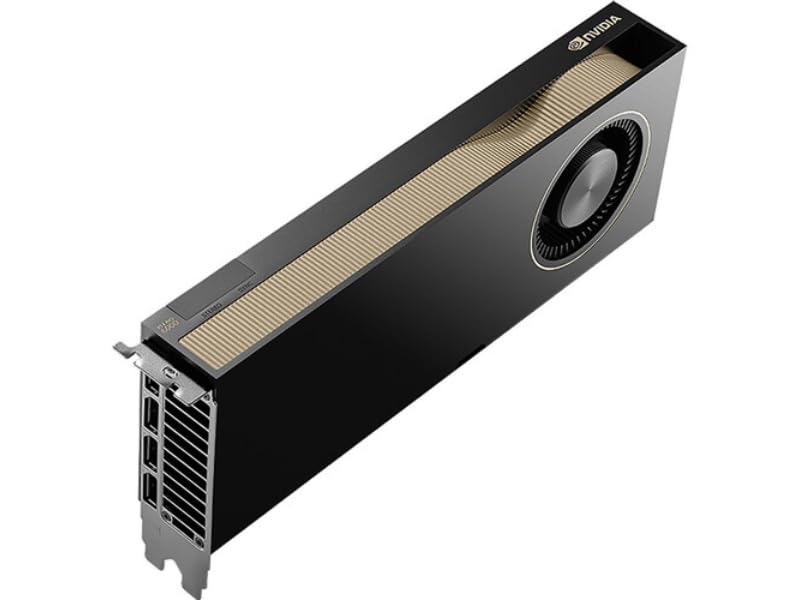
The release of Llama-4 has fundamentally shifted the hardware conversation from "how many parameters can I fit" to "how much context can I maintain." While the new GDDR7-equipped consumer cards offer blistering speeds for real-time chat, they are hitting a hard wall when tasked with the 128k+ context windows standard in modern SOTA models. To bridge this gap, engineers must now choose between the high-frequency agility of GDDR7 and the massive, high-bandwidth memory (HBM3e) buffers found in enterprise-grade silicon.
Heads up: AI Hardware Hub may earn a commission when you buy through links on this page. We only recommend gear we'd run ourselves.
§The GDDR7 revolution for low-latency chat
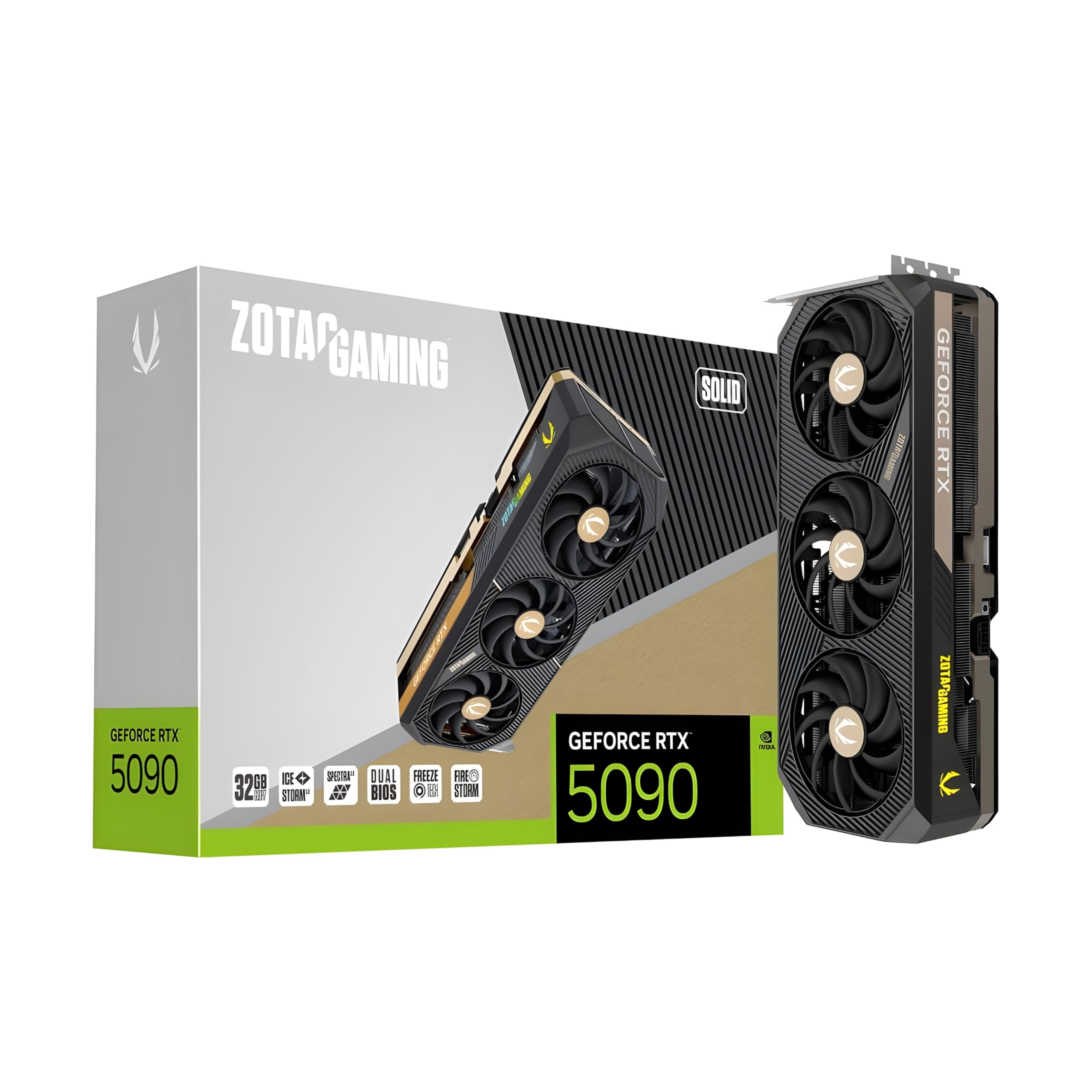
Consumer GPUs have finally embraced GDDR7, and the performance boost is undeniable. The ZOTAC Gaming GeForce RTX 5090 Solid 32GB GDDR7 Reflex 2 RTX AI DLSS4 represents the pinnacle of this shift. With 32GB of VRAM, it handles quantized versions of mid-sized models with a level of responsiveness that makes local assistants feel instantaneous.
However, GDDR7's primary advantage is clock speed and throughput per pin. For tasks like benchmarks involving image generation or standard short-form chat, this is a dream. The trouble starts when you feed the model a 50-page PDF. As the Key-Value (KV) cache grows, the 32GB buffer on even the beefiest consumer cards fills up rapidly, forcing engineers to use heavy quantization (4-bit or lower) just to keep the context from overflowing into much slower system RAM.
§Why context windows live and die on HBM3e
If your workflow involves analyzing long-form codebases or massive document sets, VRAM capacity and memory bus width become more important than raw clock speed. This is where HBM3e (High Bandwidth Memory) enters the frame. Unlike the discrete GDDR7 chips soldered around a GPU core, HBM3e is stacked vertically and connected via a silicon interposer, allowing for much wider data paths.
This architecture is what allows professional cards to maintain high throughput even as the KV cache consumes tens of gigabytes. When you step up to an enterprise system like the ASUS Dual AMD EPYC 9004 Series 4U GPU Server with 2x NVIDIA H200 NVL 141GB GPUs, you aren't just buying compute; you're buying the ability to let a model "remember" 200,000+ tokens without the perplexity breakdown that occurs on consumer hardware.
§Comparing the memory architectures
To understand which path fits your lab, you have to look at the trade-off between speed-of-light response and the depth of the model's memory.
| Feature | GDDR7 (Consumer/Prosumer) | HBM3e (Enterprise/Workstation) |
|---|---|---|
| Typical Capacity | 32GB - 48GB | 80GB - 141GB+ |
| Ideal Use Case | Low-latency chat, Image Gen | RAG, Long-context LLMs, Training |
| Data Path | 384-bit to 512-bit bus | 4096-bit+ bus |
| Cost per GB | Medium | High |
| Power Efficiency | High at idle | High under sustained load |
§The middle ground: Blackwell workstations
For ML engineers who need more than a 5090 but don't have the budget for a 4U server, the Blackwell-based workstation cards provide a critical bridge. The PNY Technology VCNRTXPRO6000BQ-PB NVIDIA RTX PRO 6000 Blackwell Max-Q Workstation Graphics Card packs a staggering 96GB of VRAM.
While this card uses high-density memory rather than the HBM3e found in the H200, its sheer volume allows for 128k context windows on models that would otherwise require multiple consumer GPUs linked via NVLink. We see this implemented effectively in the BoxGPT AI Workstation, RTX PRO 6000 Blackwell, which targets developers who need to run local coding agents with full project context.
§Hardware compatibility gaps in 2026
We are currently seeing a "compatibility gap" where software optimizations like FlashAttention-3 are being tuned specifically for the Blackwell architecture. If you're running older hardware like the A100 80GB Graphics Card - 80 GB HBM2e ECC, you still benefit from the massive HBM bus, but you lose out on the FP4/FP6 tensor cores that make the latest models lean.
- Consumer tier: High frequency, low capacity. Best for /categories/ai-gpus users who prioritize gaming and light AI development.
- Prosumer tier: High capacity, medium bandwidth. The PNY NVIDIA RTX 6000 ADA and Blackwell variants are the "sweet spot" for small-team R&D.
- Enterprise tier: Max capacity, max bandwidth. Necessary for local fine-tuning and massive context windows.
§The perplexity problem: Quantization vs. Context
As context length increases, so does the risk of "lost in the middle" phenomena. Local ML engineers often try to solve the VRAM limit by using a NOVATECH Apex WS9985X AI Workstation and running highly compressed GGUF models.
While this works, running a 120B parameter model at 2-bit quantization just to fit it into GDDR7 memory drastically increases perplexity. To maintain the intelligence of SOTA models at depth, you need the natively supported uncompressed or 8-bit weights that only fit on high-memory systems like the BoxGPT AI Workstation, RTX PRO 5000 Blackwell.
FAQ
Does GDDR7 make multi-GPU setups unnecessary?
Not at all. While GDDR7 is faster, token-to-token latency is still constrained by VRAM size for large models. You will still need to pool multiple cards for models exceeding 70B parameters, making workstations with high PCIe lane counts essential.
Is HBM3e overkill for standard RAG applications?
It depends on your document chunking strategy. If you're feeding the model 20+ documents at once to let it synthesize connections (Late Chunking), HBM3e's bandwidth prevents the inference speed from tanking as the KV cache fills up.
Can I upgrade a consumer PC to support 128k context?
To an extent. The NOVATECH Apex WS9985X provides the CPU lanes and cooling necessary to host multiple 5090s, but you'll still be limited by the per-card memory ceiling compared to dedicated enterprise systems.
§Bottom line
If your goal is building a local coding co-pilot or a personal AI that can recall your entire life's digital footprint, don't chase GDDR7 clock speeds alone. Capacity is the king of context. The 32GB on a flagship consumer card is a starting point, but for serious ML engineering, the 96GB-141GB tiers of the Blackwell and H200 generation are the true requirements for 2026's SOTA models.
Heads up: AI Hardware Hub may earn a commission when you buy through links on this page. We only recommend gear we'd run ourselves.