Local ML engineering has entered its high-stakes era. As the community moves toward massive frontiers like Llama-4 405B, the hardware requirements for local inference have split the world into two camps: those who squeeze models into consumer GDDR7 memory through aggressive quantization, and those who invest in HBM-based enterprise systems to maintain reasoning integrity.
The choice isn't just about budget—it's about the "Perplexity Tax." When you crush a 405B model down to 4-bit (or lower) to fit on a stack of consumer cards, you aren't just saving memory; you're fundamentally altering the model's ability to handle complex logic.
Heads up: AI Hardware Hub may earn a commission when you buy through links on this page. We only recommend gear we'd run ourselves.
§Llama-4 405B hardware requirements: The local reality
Running a model of this magnitude requires roughly 810GB of VRAM for FP16 precision. Obviously, that’s off the table for even the most obsessed local enthusiasts. Even at 8-bit quantization (INT8), you’re looking at over 400GB.
The current "sweet spot" for local ML hardware rests on two paths:
- The Consumer Squeeze: Using 4-bit (bitsandbytes) or newer methods like GGUF/EXL2 to run the model across a cluster of RTX 50-series cards.
- The Enterprise Flow: Utilizing the massive VRAM pools and high-bandwidth memory (HBM) of cards like the A100 80GB Graphics Card or the newer H200 systems to run higher-precision quants (6-bit or 8-bit).
§Understanding the Perplexity Tax
Perplexity is the standard metric for how well a probability model predicts a sample. In LLMs, as you lower the bit-rate (the precision), the perplexity remains stable until a "cliff." For a 405B model, the cliff is much steeper than for its 70B predecessors.
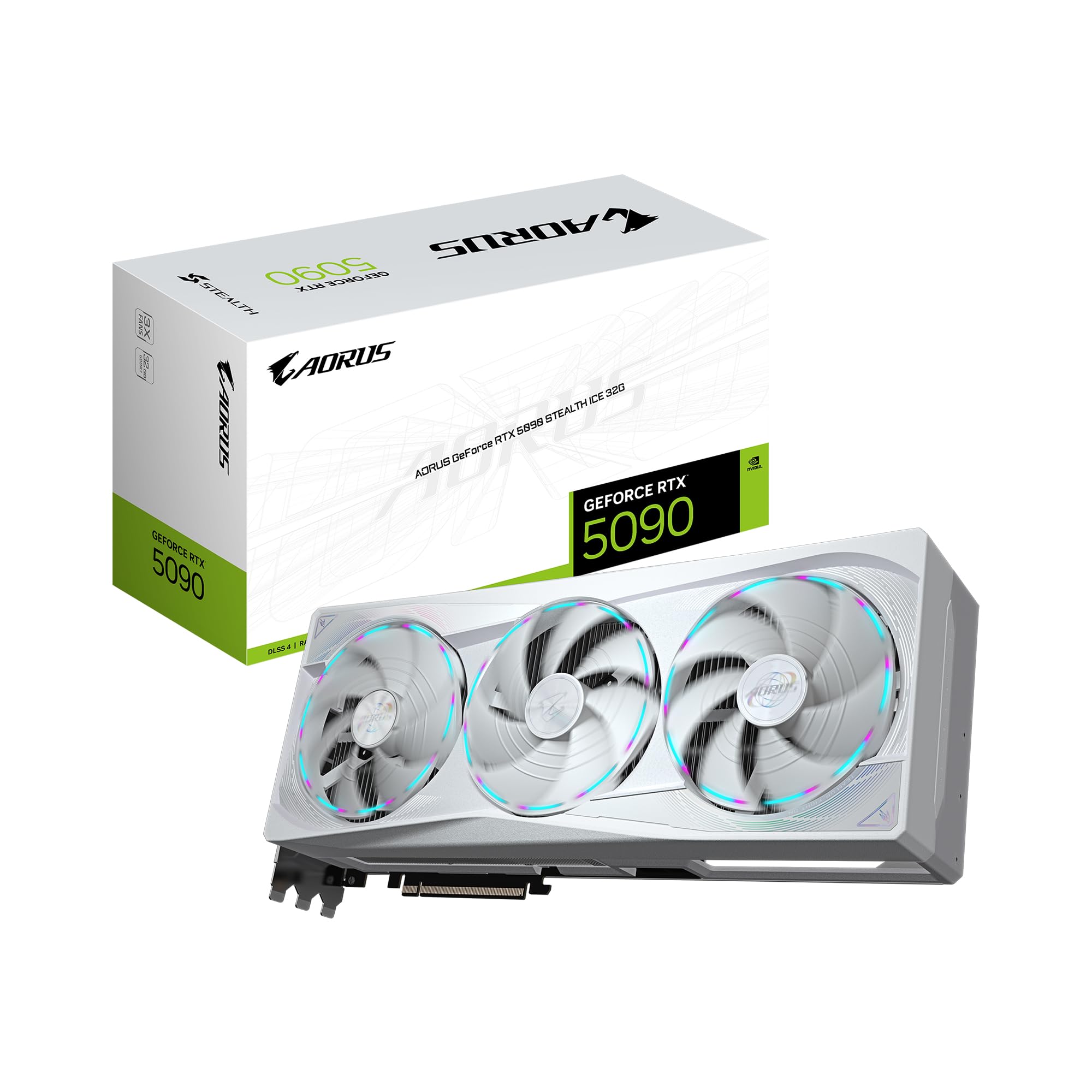
When you use the GIGABYTE AORUS GeForce RTX 5090 Stealth ICE 32G, you’re getting the fastest GDDR7 memory available. However, to fit 405 billion parameters into 32GB or 64GB chunks, you’re forced into 4-bit or 3-bit realms.
- 4-bit Quantization: Generally acceptable for chat, but starts showing "hallucination drift" in complex multi-step coding tasks.
- GDDR7 vs. HBM: The GDDR7 in the ASUS SFF-Ready Prime NVIDIA GeForce RTX 5070 Ti is incredibly fast for training small LoRAs, but it lacks the sheer throughput of HBM3e found in enterprise units, which impacts how fast your model "thinks" during long-context retrieval.
§The multi-GPU consumer strategy
If you’re hell-bent on a local build without a corporate procurement card, your best bet is a 4-way setup. Linking multiple GIGABYTE AORUS GeForce RTX 5090 Stealth ICE 32G units provides 128GB of VRAM.
This is enough to run a Llama-4 405B at a 2.5-bit or 3-bit quant. It’s "runnable," but you’ll feel the Perplexity Tax in the form of loop-logic errors and reduced nuance in creative writing. If you need a more balanced professional setup, look toward a BoxGPT AI Workstation which often bridges the gap between consumer aesthetics and workstation stability.
| Hardware Tier | GPU Config | Total VRAM | Ideal Quant for 405B | Use Case |
|---|---|---|---|---|
| Prosumer | 2x RTX 5090 32GB | 64GB | Extreme Quant (Too small) | 70B Models / Fine-tuning |
| Professional Workstation | 2x RTX PRO 6000 Blackwell | 192GB | 3.5-bit / 4-bit | Local Research / Heavy Dev |
| Enterprise Server | 2x H200 NVL 141GB | 282GB | 5-bit / 6-bit | High-Fidelity RAG / Production |
§Why memory bandwidth is the silent killer
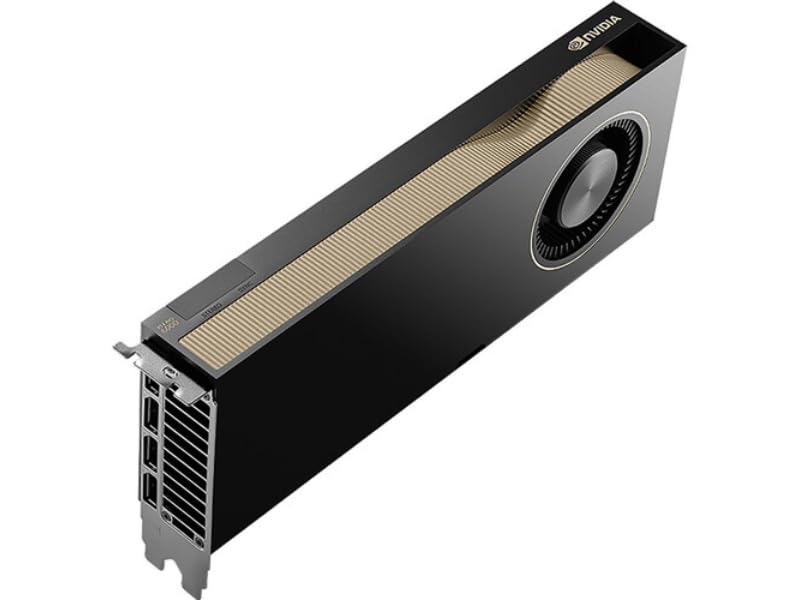
A lot of engineers focus on the amount of VRAM, but for local inference, bandwidth determines tokens per second (t/s). The PNY RTX PRO 6000 Blackwell Max-Q provides a massive 96GB of VRAM on a single card. This allows for significantly higher precision when paired in a workstation like the BoxGPT AI Workstation with 96GB VRAM.
However, even high-end GDDR7 can't match the 4.8 TB/s of bandwidth found in HBM3e systems. When you move to the ASUS ESC8000A-E12P with H200s, the bottleneck shifts from the hardware to your own ability to prompt it.
§Calculating your ROI: GDDR7 or HBM?
If you're an ML engineer working on a startup's internal RAG (Retrieval-Augmented Generation) system, you can't afford the logic errors of a 3-bit quant. The "Perplexity Tax" becomes a business loss. In this scenario, the move is either a dedicated enterprise-ai-system or a high-end workstation.
For those focusing on benchmarks and experimental builds, the consumer route is viable but frustrating. You'll spend more time managing VRAM overflows than engineering features.
The BoxGPT Professional Tier AI Workstation is a solid middle ground, utilizing the 48GB Blackwell PRO 5000 cards. It handles Llama-4 70B variants at 16-bit without breaking a sweat, though 405B will still require careful quantization strategy.
§Verdict: The best hardware for Llama-4 405B
To run Llama-4 405B locally with "Zero Compromise" reasoning, you need at least 300GB of VRAM to utilize 6-bit or 8-bit weights. The ASUS Dual H200 NVL 141GB Server is the gold standard for this, offering 282GB of ultra-fast HBM storage.
If your budget is under $10,000, your path is paved with RTX 5090 32GB units. Just be prepared to pay the Perplexity Tax—you'll get the model to run, but don't expect it to solve world-class physics problems at 3-bit precision.
Heads up: AI Hardware Hub may earn a commission when you buy through links on this page. We only recommend gear we'd run ourselves.
FAQ
Can I run Llama-4 405B on a single RTX 5090?
No. Even at extreme 2-bit quantization (which destroys most model logic), the 405B weights exceed the 32GB of VRAM on the RTX 5090. You need at least three of these cards to load the model for basic inference.
Why is HBM memory so much better than GDDR7 for AI?
Bandwidth. While GDDR7 on cards like the ASUS 5070 Ti follows traditional GPU architecture designed for tiles and textures, HBM (High Bandwidth Memory) is stacked directly on the interposer with the GPU die. This allows for drastically faster data transfer, reducing "latency to first token" in large models.
Is the RTX PRO 6000 96GB worth the price over four consumer cards?
For professionals, yes. A single RTX PRO 6000 96GB reduces the complexity of NVLink/PCIe lane saturation and provides the reliability needed for 24/7 inference tasks. It also consumes significantly less power than a four-card consumer cluster.