Local LLM development has reached a fever pitch in 2026, and the hardware requirements for the upcoming Llama-4 and DeepSeek models have essentially split the market into two camps: the consumer ultra-enthusiasts and the unified memory professionals. If you’re building a rig today, your choice between high-speed GDDR7 and enterprise-grade HBM3e isn't just about speed—it’s about whether your model fits in the VRAM at all.
For most ML engineers, the Llama-4 local inference hardware debate centers on a single question: do you stack consumer cards or pivot to a single, high-capacity Blackwell workstation?
Heads up: AI Hardware Hub may earn a commission when you buy through links on this page. We only recommend gear we'd run ourselves.
§The GDDR7 vs. HBM3e divide
The ASUS ROG Astral NVIDIA GeForce RTX 5090 32GB GDDR7 OC Edition Gaming Graphics Card brings GDDR7 to the masses, offering a massive leap in memory bandwidth over the previous generation. However, while GDDR7 is incredibly fast for gaming and medium-scale inference, it operates on a different plane than the High Bandwidth Memory (HBM) found in enterprise cards.
HBM3e, featured in high-end Blackwell architectures, uses stacked DRAM dies to minimize physical distance to the GPU. This results in significantly lower latency and better throughput-per-watt. While a multi-GPU RTX 5090 setup can provide substantial raw compute, the overhead of moving data across PCIe lanes between cards—even with NVLink-equivalent bridges—can become a bottleneck for autoregressive decoding in models like Llama-4.

§Why VRAM overhead matters for Llama-4
As models grow, the KV (Key-Value) cache—the "memory" of the conversation history—occupies more VRAM. For a 405B Llama-4 variant, even at 4-bit quantization, you're looking at a memory footprint that exceeds the capacity of a single consumer card.
If you opt for a multi-GPU setup with two ASUS ROG Astral NVIDIA GeForce RTX 5090 32GB GDDR7 OC Edition Gaming Graphics Card, you have 64GB of VRAM. This is enough for Llama-3 70B in FP16 or a quantized Llama-4. However, once you cross into the newer 100B+ parameter models, you run into the "splitting" problem. Splitting a model across cards increases latency.
This is where the PNY Technology VCNRTXPRO6000BQ-PB NVIDIA RTX PRO 6000 Blackwell Max-Q Workstation Graphics Card changes the game. With 96GB of VRAM on a single PCB, you can keep the entire model and a massive context window on a single chip.
§Performance Comparison: Consumer vs. Enterprise
| Metric | Quad RTX 5090 Setup | Single RTX PRO 6000 Blackwell |
|---|---|---|
| Total VRAM | 128GB (4x 32GB) | 96GB |
| Memory Bus Type | GDDR7 | Blackwell Max-Q / HBM Optimized |
| Power Consumption | ~1800W - 2400W | ~300W - 450W |
| Interconnect Bottleneck | High (PCIe 5.0 Switch) | Zero (On-die) |
| Primary Use Case | Bruteforce Batch Inference | High-context Dev & Fine-tuning |
§Throughput-per-watt: The hidden cost
In 2026, electricity isn't getting any cheaper. A workstation running four RTX 5090s requires a dedicated 20A circuit and significant HVAC considerations. You’re trading a lower upfront MSRP for a massive monthly operating cost.
Conversely, the BoxGPT AI Workstation, RTX PRO 6000 Blackwell, 96GB VRAM provides a unified 96GB pool that draws significantly less power for the same token-per-second output. If you're building a "local server" that stays on 24/7, the RTX PRO 6000 Blackwell pays for itself in roughly 18 months of heavy usage compared to a multi-consumer-card space heater.
§The multi-GPU route: Is it still viable?
Building a local rig with multiple ASUS ROG Astral NVIDIA GeForce RTX 5090 32GB GDDR7 OC Edition Gaming Graphics Card units is the way to go if:
- You primarily do individual inference tasks on 70B models.
- You need raw FP32 performance for other tasks like rendering.
- You are on a "pay-as-you-grow" budget, starting with one card and adding more as needed.
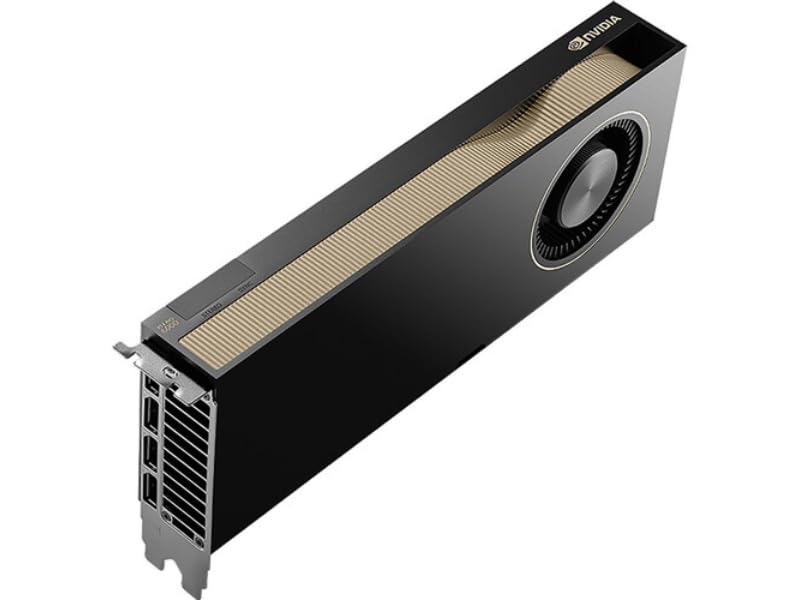
However, for professional workflows, even the PNY NVIDIA RTX 6000 ADA at 48GB is starting to feel tight for the newest frontier models. If you’re serious about Llama-4 local inference hardware, 96GB of Blackwell VRAM is the new gold standard.
§Enterprise alternatives for the elite
If you have the budget of a small startup and need to train or conduct massive inference batches, looking at AI workstations or servers is the only path. The ASUS Dual AMD EPYC 9004 Series 4U GPU Server (ESC8000A-E12P) utilizes 2x NVIDIA H200 NVL cards, providing a staggering 141GB per card. This isn't just "running" Llama-4; it's serving it to an entire company.
For most local devs, the search ends at something like the BoxGPT AI Workstation, RTX PRO 5000 Blackwell, 48GB VRAM. It’s a balanced entry point into the Blackwell generation without the $70k server price tag.
- Check out our latest GPU Benchmarks for direct head-to-head data.
- Browse AI Workstations for pre-built local solutions.
- Compare AI GPUs for custom rig builds.
§Choosing the right architecture for your stack
- For the Budget Pro: Start with a single PNY NVIDIA RTX 6000 ADA. 48GB is enough for most Llama-2/3 workflows, though it may struggle with full-weight Llama-4 without quantization.
- For the LLM Developer: The BoxGPT AI Workstation, RTX PRO 6000 Blackwell is currently the best bang-for-your-buck professional setup for local LLM work.
- For the Researcher: Older high-VRAM cards like the A100 80GB Graphics Card are still valuable for their ECC memory and massive VRAM, but they lack the newer tensor cores found in Blackwell cards.
FAQ
Can I run Llama-4 on a single RTX 5090?
While you can run quantized versions of smaller 8B or 30B variants, a single RTX 5090 with 32GB will likely not be enough for the flagship Llama-4 models at high precision. You would need at least two cards.
Is the RTX PRO 6000 Blackwell worth the $13k price tag?
For businesses, yes. The 96GB VRAM capacity allows for model development that is impossible on consumer hardware. The power savings and reliability of enterprise drivers also factor into the ROI.
Why do I need HBM3e instead of GDDR7?
HBM3e offers significantly higher memory bandwidth and lower power consumption. For ML tasks where the GPU is constantly waiting for data from memory (memory-bound tasks), HBM3e provides a noticeable speedup over GDDR7.
§Verdict
If you're an enthusiast looking to tinker, a dual ASUS ROG Astral NVIDIA GeForce RTX 5090 setup is an incredible powerhouse. But if your career depends on iterating on models like Llama-4, stop fighting the VRAM limits of consumer silicon. The transition to a dedicated workstation like the BoxGPT Blackwell 96GB system is the only way to ensure your local hardware doesn't throttle your productivity.
Heads up: AI Hardware Hub may earn a commission when you buy through links on this page. We only recommend gear we'd run ourselves.