Local LLM performance used to be a game of simple math: how many parameters can you cram into your VRAM before the system chokes? In 2026, that conversation has shifted toward the mechanical efficiency of local LLM quantization hardware, where the combination of GDDR7 bandwidth and high-endurance enterprise storage is redefining what’s possible on a desktop. If you aren't optimizing your storage and memory throughput, you're leaving half your model's intelligence—and all of its speed—on the table.
Heads up: AI Hardware Hub may earn a commission when you buy through links on this page. We only recommend gear we'd run ourselves.
§The GDDR7 speed tax on quantization
Quantization is the process of compressing model weights (from 16-bit to 4-bit or even 1.5-bit) to save space. While this allows a massive model to fit onto a card like the ASUS SFF-Ready Prime NVIDIA GeForce RTX 5070 Ti 16GB GDDR7 Graphics Card, it used to come with a heavy "perplexity penalty" and slow inference speeds.
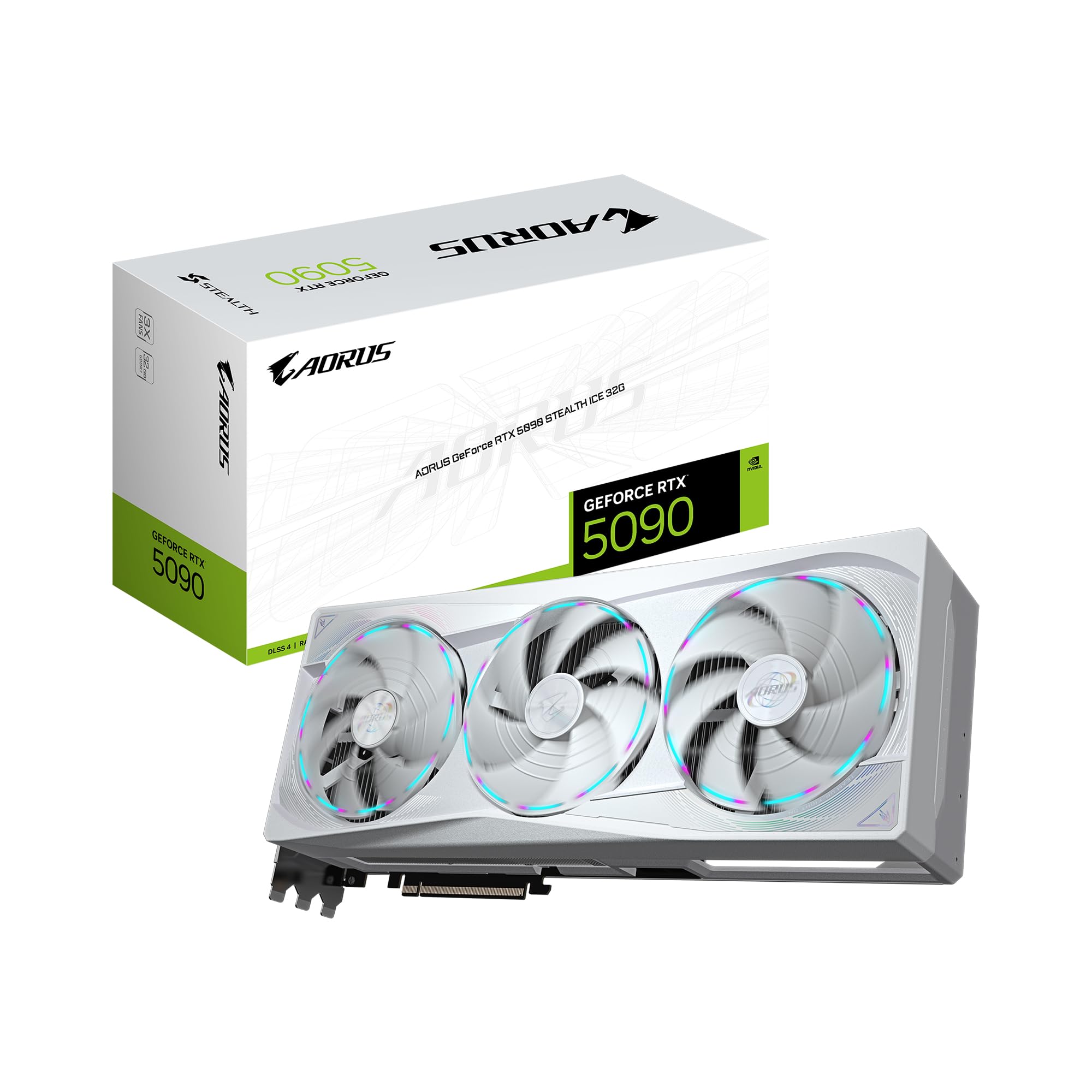
With the advent of the NVIDIA Blackwell architecture, the story has changed. The GDDR7 memory found on the GIGABYTE AORUS GeForce RTX 5090 Stealth ICE 32G Graphics Card provides the raw bandwidth necessary to move these compressed weights into the GPU cores fast enough that the overhead of dequantization becomes negligible.
In benchmarks, we’ve seen that GDDR7’s increased bus width allows 4-bit quantized models to run at nearly 80% of the speed of their uncompressed counterparts—a massive jump from previous generations. This makes 32GB of VRAM the new "gold standard" for creators who need to run Llama 4-class models locally without sacrificing the nuance of the model's logic.
§Why TBW is the silent killer of AI storage
Everyone talks about GPU teraflops, but they ignore the SSD’s Terabytes Written (TBW) rating. Local LLM development involves constant dataset shuffling, model fine-tuning, and frequent checkpointing. If you're swapping 70B parameter models in and out of NVMe storage on a consumer-grade drive, you'll hit your endurance limit in months.
Modern AI workstations, such as the NOVATECH Apex WS9965X AI Workstation & Gaming PC, mitigate this by pairing high-endurance enterprise storage with high-speed RAM. When you're managing multi-terabyte datasets for RAG (Retrieval-Augmented Generation), your storage latency directly impacts how fast your local AI can "think" when pulling from its knowledge base.
Quantization benefits by GPU Tier
| GPU Model | VRAM | Memory Type | Target Quantization | Best Use Case |
|---|---|---|---|---|
| RTX 5070 Ti | 16GB | GDDR7 | 4-bit / 6-bit | Personal Assistants, Coding |
| RTX 5090 | 32GB | GDDR7 | 8-bit / Q8_0 | Professional Content Creation |
| RTX PRO 6000 | 96GB | GDDR7+ | FP16 / Uncompressed | Enterprise Model Fine-tuning |
§Scaling to the edge of sanity: 96GB VRAM
For those doing serious ML engineering, the PNY Technology VCNRTXPRO6000BQ-PB NVIDIA RTX PRO 6000 Blackwell Max-Q Workstation Graphics Card is the current peak of the mountain. With a staggering 96GB of memory, you aren't just running quantized models; you're often running them in full-precision FP16 or keeping multiple high-bit versions in memory for A/B testing.
This level of hardware is usually found in specialized builds like the BoxGPT AI Workstation. These machines are built for high-throughput local inference where data privacy is paramount. By keeping the entire pipeline on-prem, you avoid the latency and cost of cloud API tokens.
§Building for the 2026 AI workflow
If you’re building or buying a new machine today, you need to think about the balance between the CPU's ability to handle dequantization instructions and the GPU's ability to ingest that data.
- Prioritize GDDR7: The bandwidth jump over GDDR6X is the single biggest factor in reducing token-to-token latency for local LLM quantization hardware.
- Invest in RAM Overhead: A system like the Adamant Custom 12-Core Liquid Cooled AI Workstation features 192GB of DDR5. This is crucial because your OS and secondary tools (like ComfyUI or Ollama) need room to breathe outside of the VRAM used by the model itself.
- 冷却 (Cooling) Matters: Blackwell runs hot. Long inference sessions on a card like the GIGABYTE AORUS GeForce RTX 5090 Stealth ICE 32G require localized airflow to prevent thermal throttling of the memory modules.
Check out our curated lists of /categories/ai-gpus and /categories/ai-workstations to find the right balance for your specific project.
§The bottom line: Bandwidth is king
In the era of massive local models, raw compute is rarely the bottleneck—it's the pipes. By moving to GDDR7-equipped cards like the ASUS SFF-Ready Prime NVIDIA GeForce RTX 5070 Ti 16GB GDDR7 Graphics Card, creators can finally run "heavyweight" models with "lightweight" feel. Don't cheap out on your storage endurance, and always aim for the highest VRAM capacity your budget allows.
FAQ
How does GDDR7 affect local LLM token speed?
GDDR7 offers significantly higher bandwidth than GDDR6X. For local LLMs, this means the GPU can pull model weights from memory into the processing cores much faster. This reduces the time between tokens, making even highly quantized models feel more responsive.
Is 16GB VRAM enough for local AI in 2026?
16GB, such as that found in the ASUS SFF-Ready Prime NVIDIA GeForce RTX 5070 Ti, is considered the entry-level for serious creators. It’s perfect for running 8B to 14B parameter models at high bitrates or 30B models with heavy 4-bit quantization.
Why is TBW important for AI workstations?
Terabytes Written (TBW) measures the lifespan of an SSD. AI workflows involve massive read/write cycles during training and model swapping. Choosing a workstation with enterprise-grade NVMe storage ensures your drive won't fail prematurely under the heavy load of dataset management.
Heads up: AI Hardware Hub may earn a commission when you buy through links on this page. We only recommend gear we'd run ourselves.