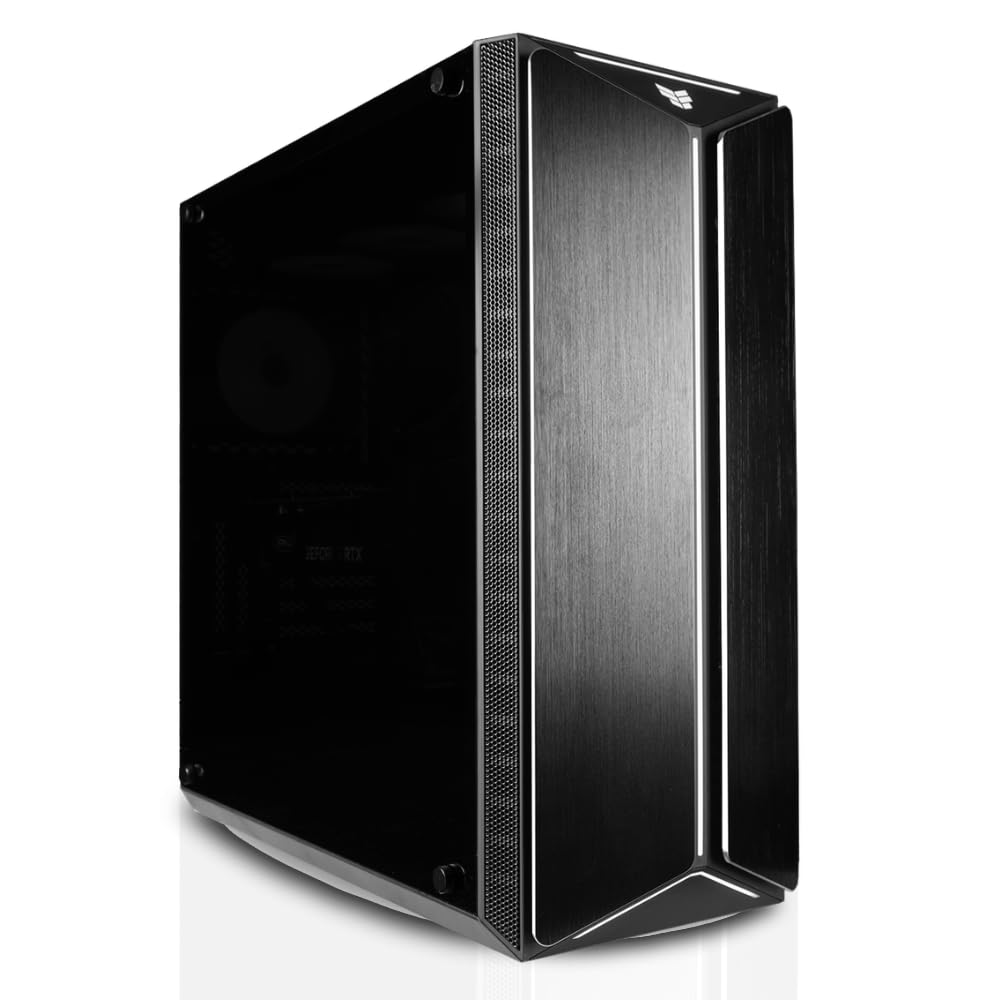
The era of massive AI models and photoreal 3D scenes has pushed consumer-grade hardware to its breaking point. For professionals playing at the edge, waiting is losing. The Sentinel Non-RGB RTX PRO 6000, 24-Core Intel Ultra 9 285K, 128GB DDR5 RAM, 3x4TB NVMe SSDs isn't just a computer; it's a capital investment in productivity, packing an incredible 96GB of VRAM and a balanced spec sheet to tackle workloads that would choke any other machine.
TL;DR
- The Sentinel PRO 6000 is an enterprise-tier workstation built for serious AI development, LLM fine-tuning, and high-end 3D rendering.
- Its headline feature is the 96GB NVIDIA RTX PRO 6000 GPU, a VRAM titan that unlocks new possibilities for large model inference and complex scene manipulation.
- The 24-core Intel Ultra 9 CPU, 128GB of DDR5 RAM, and 12TB of ultra-fast NVMe storage create a balanced system where no single component is a bottleneck.
- While the $16,599.99 price is substantial, it's justified for professionals whose time is money and who work with datasets or models too large for consumer hardware.
- Top Pick: For pros needing maximum VRAM without the complexity of a multi-GPU setup, the Sentinel Non-RGB RTX PRO 6000 is the undisputed champ.
§What is the Sentinel RTX PRO 6000 Workstation?
Let's be clear: this isn't your average gaming PC with a fancy case. The Sentinel Non-RGB RTX PRO 6000 is a purpose-built tool for a specific user: the machine learning engineer, the AI researcher, the VFX artist, and the 3D professional whose workflows involve massive amounts of data. It eschews flashy RGB lighting for a clean, professional chassis that houses some of the most powerful components available today.
At its heart is the rare and powerful NVIDIA RTX PRO 6000 Ada Generation GPU. Paired with a top-tier Intel Ultra 9 285K CPU, a vast 128GB pool of system RAM, and a cavernous 12TB of Gen4 NVMe storage, this machine is designed for one thing: extreme throughput.
§The 96GB GPU: A VRAM King for AI and LLMs
The single most important component in this build is the GPU. The workstation-class NVIDIA RTX PRO 6000 Ada Generation card brings two critical things to the table: 96GB of GDDR7 ECC memory and enterprise-grade drivers.
For anyone working with AI, that 96GB figure is electrifying. It means you can load and fine-tune large language models (LLMs) that are simply unusable on consumer cards. Think 70B parameter models like Llama 3 or Cohere's Command R+. While a 24GB RTX 4090 struggles with quantization and memory offloading for these models, the PRO 6000 can handle them natively in VRAM, dramatically accelerating inference and iteration cycles.
For diffusion models, this VRAM opens up new frontiers. Generating high-resolution images with complex LoRA stacks in ComfyUI or training custom SDXL checkpoints becomes a fluid process, not a memory-error-prone nightmare. You can use larger batch sizes, which directly speeds up training time.
§CPU, RAM, and Storage: A Balanced Powerhouse
A monster GPU is useless if the rest of the system can't keep up. Sentinel made smart choices here to create a balanced platform.
CPU: 24-Core Intel Ultra 9 285K
The Intel Ultra 9 285K, with its 24 cores and 24 threads, provides the raw single-threaded and multi-threaded horsepower needed for data preprocessing, code compilation, and managing the operating system while the GPU is maxed out. Clocking up to 5.7 GHz, it ensures CPU-bound tasks in your workflow don't become the new bottleneck.
RAM: 128GB DDR5
128GB of DDR5 RAM is a godsend when working with large datasets. Before data even gets to the GPU, it needs to be loaded and prepared in system memory. Whether you're manipulating a 100GB medical imaging dataset or caching assets for a massive Unreal Engine scene, this huge RAM pool prevents the system from bogging down and relying on slower disk swap.
Storage: 12TB of NVMe SSDs
It's not just one SSD, but a 3x4TB array of NVMe drives. This provides a staggering 12TB of near-instantaneous storage. For video editors working with 8K RAW footage in DaVinci Resolve or AI researchers with multi-terabyte datasets, this is non-negotiable. The speed means loading projects in seconds, not minutes, and scrubbing through complex timelines without a single dropped frame.
§Performance in 3D Rendering and Creative Workflows
While its AI prowess is the main story, the Sentinel RTX PRO 6000 Workstation is an absolute beast for 3D content creation.
In Blender Cycles, the 96GB of VRAM means you can render scenes of immense complexity without resorting to out-of-core rendering, which can be painfully slow. Think architectural visualizations with full-resolution textures, high-poly CAD models, and complex particle simulations. The RTX cores also provide best-in-class ray tracing performance, slashing render times from hours to minutes.
For Unreal Engine 5.4 artists, the benefits are similar. You can work with Nanite and Lumen in massive, open worlds with a level of fidelity and smoothness that is simply unattainable on lesser hardware. Compiling shaders, loading levels, and iterating on lighting feels instantaneous.
| Feature | Sentinel RTX PRO 6000 | High-End Consumer PC (DIY) |
|---|---|---|
| GPU | NVIDIA RTX PRO 6000 (96GB) | NVIDIA RTX 4090 (24GB) |
| CPU | 24-Core Intel Ultra 9 285K | 16-Core AMD Ryzen 9 7950X |
| RAM | 128GB DDR5 ECC | 64GB DDR5 Non-ECC |
| Storage | 12TB Gen4 NVMe | 4TB Gen4 NVMe |
| Great For | 70B+ LLM fine-tuning, 8K video, massive 3D scenes | 4K gaming, SDXL inference, 4K video |
| Price | $16,599.99 | ~$4,500 - $5,500 |
§Who should buy the Sentinel PRO 6000?
This isn't a machine for everyone, but for a select group of professionals, it's the right tool for the job.
- LLM Developers/Researchers: If you need to fine-tune or run inference on 70B+ parameter models locally, this is your machine. The 96GB of VRAM is the key.
- VFX and 3D Animators: For artists working at studios like ILM or Weta, dealing with production-level scenes that exceed 24GB or even 48GB of VRAM, this workstation will pay for itself in saved time.
- Data Scientists (Medical/Scientific Vis): Professionals working with enormous datasets (CT scans, geological data) that need to be visualized and manipulated in real-time will see massive performance gains.
- AI-focused Enterprises: Small AI startups or corporate research labs needing a powerful, reliable, and supported platform for their engineers can deploy this without the IT overhead of building and managing custom rigs.
§FAQ
Who shouldn't buy this workstation?
If your primary tasks are gaming, streaming, or even standard 4K video editing, this machine is complete overkill. You can get fantastic performance for those tasks with hardware from our /categories/ai-gpus and /categories/ai-workstations guides for a fraction of the price.
Is 96GB of VRAM actually necessary?
For running a pre-trained Llama 3 70B model with 4-bit quantization? No. But for fine-tuning it, or running multiple models, or developing next-gen models, it is absolutely critical. It's about removing limitations. Our /tools/vram calculator can help you estimate needs for common models.
Can't I just build a cheaper PC myself?
You could build a powerful PC, but you cannot build this PC for significantly less. The NVIDIA RTX PRO 6000 GPU alone is an incredibly expensive, enterprise-only component. Add in the cost of a high-core-count CPU, 128GB of ECC RAM, and enterprise-grade motherboards and power supplies, plus the warranty and support, and the price of the Sentinel system becomes much more reasonable.
§Bottom Line
The Sentinel Non-RGB RTX PRO 6000 is an unapologetically professional tool for a market suffocated by VRAM limitations. It's a meticulously balanced and immensely powerful workstation that delivers on its promise of handling the most demanding AI and 3D workloads you can throw at it. For those who measure project timelines in weeks and render times in days, the cost isn't just justified; it's a bargain.